I know next to nothing about Spongebob et all. Previous to this, the most I had seen of this series was a few minutes at a McDonald's as I was waiting for my order.
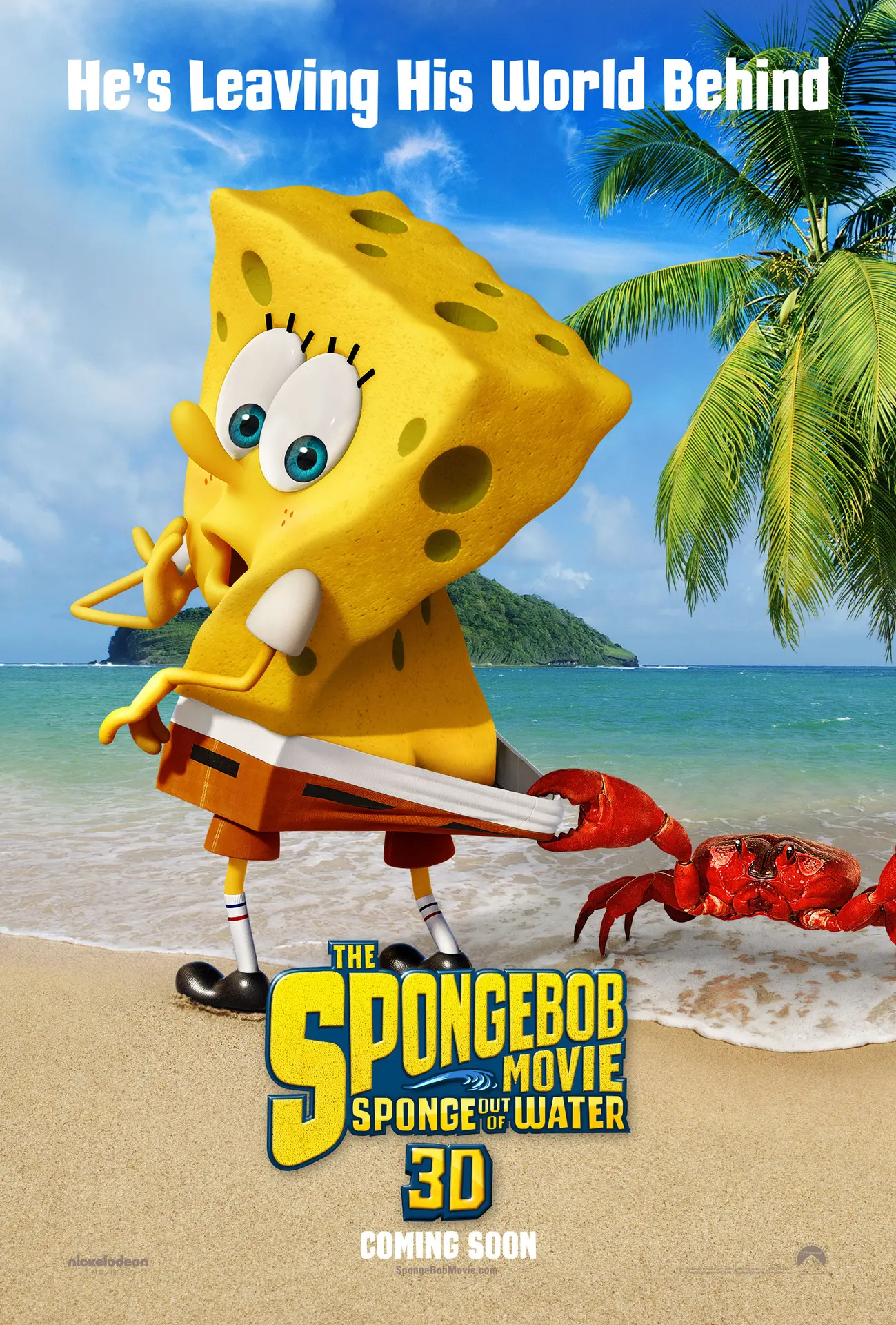
The movie was funny. Filled with puns, visual site gags, play on words, sometimes just charming idiocy.
The movie was innocent and starry eyed, I liked the characters. I liked the world.
I think the most impressive thing about the movie is how sharp an edge they kept between the adult humor and the child humor. By adult, I don't mean that the humor was ever crude, I simply mean that it probably isn't something that a child would find funny. I like the idea of a child watching this with an adult, and the adult laughs at something. The child ask what is funny. The adult would explain that it is a play on words or something. The child still wouldn't get why it is funny, but they would probably laugh because children tend to imitate the adults around them. I appreciate children's movies that have adult humor that can always be explained to children without some lame "I will tell you when you are older" nonsense. That sort of thing always bothered me when I was a child. Much better to have humor that can be explained, and kids may still not get it, but at least they grew a little in terms of understanding the adult mindset. It is a shared experience that way, not just a one sided joke.
Movie was much better than I expected. I mean, it is still a juvenile movie, but kept me well entertained for its 90 minute running time.
Odd. I was actually quite engaged throughout the entire movie. And yet, the lack of a climactic ending left me somewhat unfulfilled. It is funny. You can enjoy every moment, but if it is missing certain pieces, your memory of things will be one of disappointment.
SPOOOOOOOOOOOOOOOOILERS
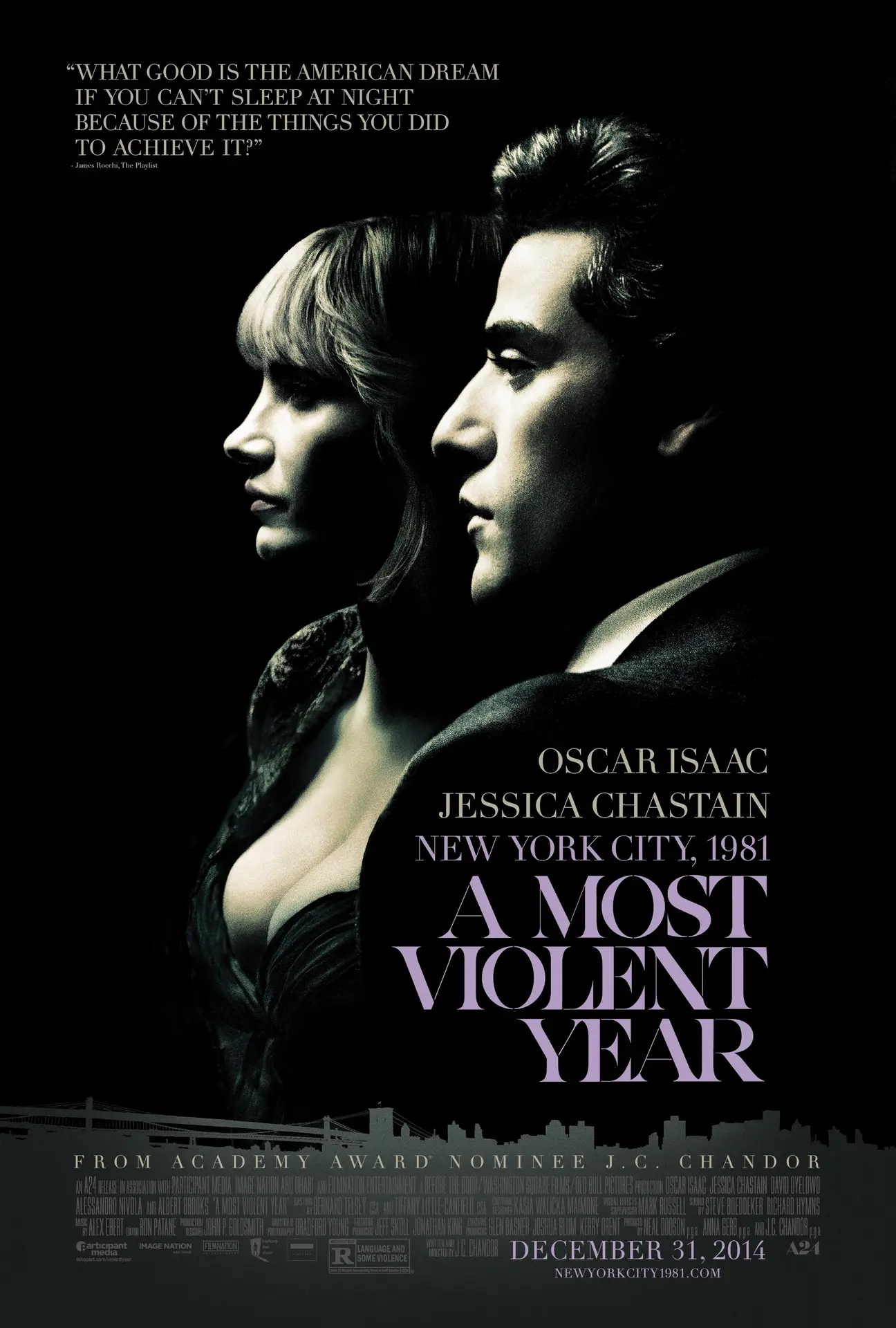
The climax of having Elyes Gabel shoot himself was not much of a climax. The real ending was like "Ok, now we have the money because you have been squirlling it away. Thanks dear. Fin." It just wasn't that resolute or interesting an ending. Expectations of gangster movies are that there will be a giant shootout or something at the end. That never happened. Even though it was good, I was a bit of a let down.
I think the scene I liked the most was the one of Elyes running down the bridge tower stairs. It filled me with a real sense of dread. As he heaved and lumbered down the stairs, letting momentum carry him more than self force, it was like watching a frightened animal work itself deeper into a trap. I kept thinking that someone was going to be waiting on the next flight. Tense, well done scene.
I like the fact that Abel Malores was only able to be as clean as he was because everyone around him was so crooked. I appreciated the fact that he was faced with a fairly clear dilemma at the end. Either take the money from Peter Forente and be in bed with the mob (and all that entails). Or use his own ill gotten money to fund the legitimate business activity he was interested in engaging in. Either way, by his own means or someone else, he is still engaged in a criminal enterprise. Kind of like the universe is sending you a message there.
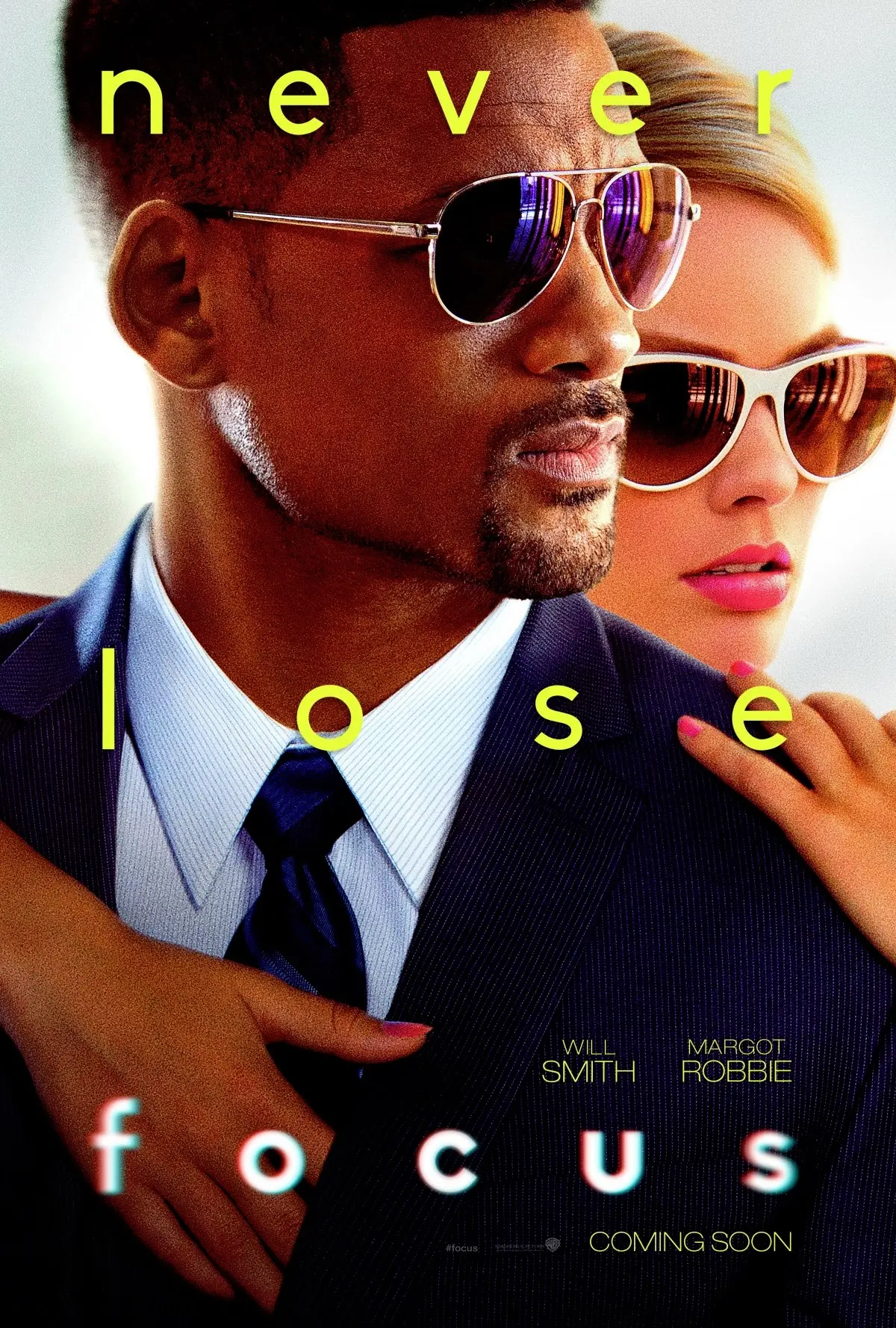
Focus was an 80% in most dimensions. Unfortunately, this leaves you feeling that the movie was worse than the sum of its parts.
If a movie has something uniquely good to it, you can often overlook other elements that perhaps fell short. Focus has no obvious shortcomings, it is always on target, it is just that it never hits a bullseye on anything.
SPOIILLLLLLLLLLERS:
One part of the movie I did like was the betting scene for the "Superbowl" (Note. It wasn't THE Superbowl, it was just a thing involving American Football that looked a lot like the Superbowl, damn trademark protection). It seemed silly at first, he took a double or nothing bet with a ~59% chance of payout. That is dumb. His girl pointed out how dumb that is. Will Smith said something along the lines of (paraphrasing) "then we would double it again and bet on something else. He will always take the bet." I had to think about it for a second, but it is true. As long as you have infinite funds and you know the other party will always accept, you will eventually be able to win any double or nothing bet. Just keep doubling and betting, stopping so that you are the last winner; it's that simple. If you have better than 50% odds, then the average number of times between "wins" on such bets becomes smaller and smaller. Will Smith didn't have infinite funds, but he might have had enough to make it probabilistically impossible that they could actually go bust. I thought that was neat.
I also enjoyed (although am skeptical) about the pseudo psychology of priming 55. Or the science of attracting women that Will Smith later espoused. It is a fun idea, but probably isn't nearly as deterministic as presented in the film.
Saw "Black Sea" this evening. Enjoyed it, but am kind of a sucker for Submarine movies.
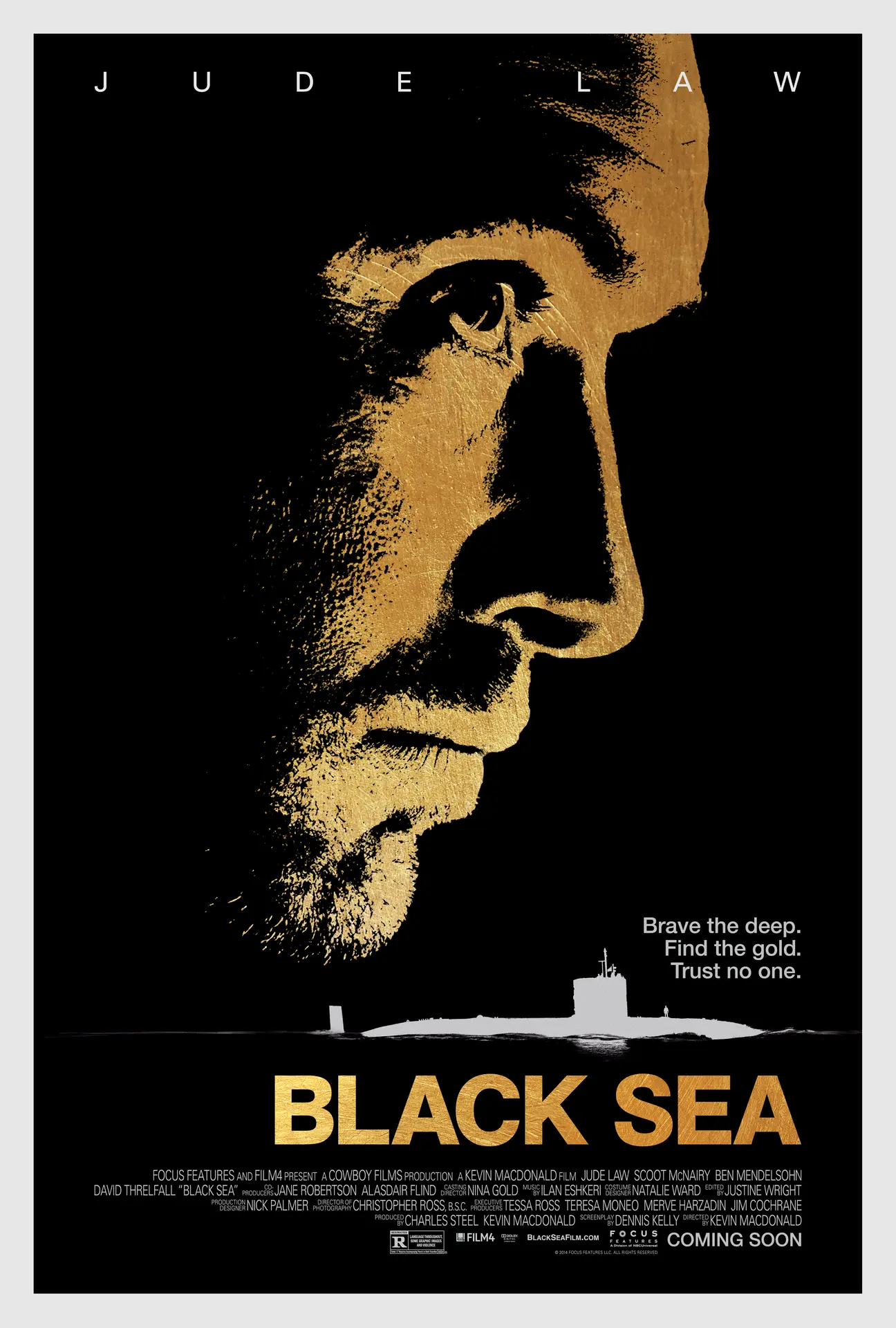
This movie was a bit shallow (sorry), but it was a fun ride. The story involves recovering lost Nazi gold, Russians, yada yada, you have heard it before. The plot isn't that important.
A good sub movie should leave you with a tense neck and shoulders. It is about just how stressful it can be when in such close contact with other human beings. How frightening the cold and pitch black abyss of the ocean is. How disconnected you are from any hope of rescue or aid. This movie delivered on all these fronts, so altogether, as a sub movie, it was a good sub movie.
Martin is some sort of programmer/hacker. He discovers a file that lets him manipulate reality. We will accept that without question. Fine.
I just couldn't accept the characters.
I am a programmer, many of my friends are programmers, almost everyone I know is either a programmer or engineer; Martin is no programmer.
There are personality traits and characteristics that (broad strokes here) go with being a technical person. Martin seems to exhibit none of these. If I were to pigeonhole the character, I would say he is more of a Gamer than a Programmer.
The characteristics he had seemed strange. Indecisiveness, rashness, reactionary nature, a flair for the dramatic, a desire to be the center of attention; none of these tend to be characteristics of technical people. This is forgivable, perhaps he is just a jacked-up-alpha-male version of a technical person. Still, they should have spent some time explaining why he was technical and had all these particular characteristics.
The characteristics he had seemed odd, the characteristics he lacked seemed downright bizarre. He spends no real time questioning why the file exist. He just tries things without even setting up controlled experiments first. He never really made any real sense of time travel. Never even trying to go back in time to warn himself not to commit bank fraud. Instead just deciding that because he hadn't been warned that it was impossible ? His lack of curiosity about his own environment was peculiar. I don't need my characters to spend their entire day naval gazing, but even superficial characters should have some level of introspection. It was really disturbing to me how little he though or planned before he acted. Worse was how he never seemed to question the things he observed. It was very peculiar, only the stupid or indoctrinated have so little concern about their surroundings.
The remaining characters are so shallow as to be above criticism. How can you fault someone you barely know?
Martin felt like a vehicle that needs to be driven by the plot. I can't imagine any part of his history, and I couldn't predict any part of his future. His character was so inert that it seems like he would sit there unchanging if the plot didn't move him along.
A great deal of the tech stuff was pure nonsense, even from the magical point of view of the file. I am not going to make a big deal out of it though, as this is really a fantasy magic novel with a technology plating.
Goofed around pretty much all day; the post below is pretty much all I have to show for it.
Today I looked up all the theme songs of childhood TV shows that I used to like. I lived in France from 6-8 and so the theme songs from that time are of course in French.
Bioman
This show was really popular when I was young. By my recollection, it was basically just Mighty Morphing Power Rangers done on a lower budget (is such a thing possible?). I thought the show itself was pretty stupid, but this is basically what we would spend our time playing as. It was dubbed into French, all the actors were Asian (I assume Japanese). It had something to do with fighting a mad scientist and gengineered humans who could each summon a portion of a fighting robot. The video above isn't actually the opening theme, but it is the one that every kid associated with Bioman. The actual opener wasn't all that great.
Le Chevalier du Zodiac
This show was a phenomena in France. Every boy I knew owned at least a few of the figures from this series. If you accidently broke a piece on the intricate and fragile toy figure, there was going to be waterworks that day. Young boys just flat out loved this series. It was an obsession among my age group. I have vague recollections of the characters fighting older men a lot of the time. By my memory, they just permuted on fight after fight after fight. Again, I don't think this was the actual opener (it is too long) but it is the one I remember from my memory. Also, interestingly enough, it is the same guy who sings the Bioman song. I don't know what is up with that. All I know is that every boy could sing this song.
Ken Le Survivant de la Terre l'enfer
In my memory, he was "The survivor of Earth", but it turns out he survived Hell. Funny how memory works. This was probably the most violent show I would watch as a child. Ken was pretty hardcore, he would get jacked up and stick his fingers into people somehow killing them with (Tai Chi?) pressure points. He also was very fond of making "ka-ka-ka-ka-ka-ka" noises whenever he rapid fire punched/kicked/whatever. Naturally, whenever any group of boys play fought, we always had to make the noises Ken made when he fought. It must have sounded like a group of birds dying.
Galaxy Express 999
I have no real memory of Galaxy Express 999 being very popular. I am pretty sure that it was an older series. I don't think that any of my friends were into it that much. I liked it a good deal, as it involved lots of robots and a woman that a young boy is basically in love with. I am not entirely sure, but I think the woman may have looked like a physical education teacher whom I fancied. Anyway, the theme was straight up metal. Whenever I try to remember how numbers work in French, I always humm "Galaxy Express neuf san quatre vingt dix neuve" (9100 "neuf-san" + 420 "quatre-vingt" + "dix" 10 "neuve" 9). Not that it comes up that often, but there it is.
I don't remember whether I ever stated it, but I place a lot of value on new ideas. In this sense of the word, Accelerando did fairly well. However, there were problems that I don't feel comfortable going into unless you have already read it. I don't like to ruin books for people, so I will just say read it with the knowledge that every section is probably around 90% as interesting as the section preceding it, but that it is worthwhile book if you enjoy being presented with new ideas.
***** SLIGHT PLOT DETAILS FOLLOW *******
As I remember, the plot was roughly divided divided into 9 sections, 3 groupings of 3 sections each. The first grouping is our immediate future, the second grouping is our protagonists daughter's story, and the third is their further descendants (and his reincarnation... twice... at least [don't ask]). As you might have guessed, the plot is a accelerating mess. Towards the end, I just didn't know what to do with it anymore. In terms of narrative, flow, character, and story, the first third is pretty good, the second is okay, and the third was frankly dull. I actually thought this was kind of funny, as I my progress in this book was slowing down as the singularity was speeding up.
But enough about the book itself, lets talk about the ideas! <Work in progress, I am filling these out as I have the time>
1) I though the scene where manx looses his goggles and literally has no idea who he is or what he is doing was very interesting.
2) Reason we don't observe, and don't deal with alien races is that singularity just means building smart matter, not conquest or anything like that.
3) Economy 2.0 will be about novelty, not power, matter, influence, or anything else.
4) Self aware contracts and corporations.
5) External brains allow concurrent though.
6) External brains allow accelerated though.
7) Sea slug is born in a digital realm, does not understand that there is actually a physical one.
8) Concept of being able to fully model a human being
I actually read this short story on the same day I saw the new (2012) movie. It is a silly story, makes you laugh at the end. Two days previous to that, I saw the Arnold version of the movie based on this book.
If Arnold's version is based on this story, then the 2012 version would at best be "inspired by" Arnolds version. Anyway, that is enough about the movies, they are just fresh on my mind as I just watched them.
The story is fun, a review seems kind of pointless since the entire story is less than 30 pages. Go ahead and read it. It isn't the best PKD by any standard, but it will fill a subway ride. I can't really imagine writing any more about this, so I will stop now.
I really don't feel like I have that much to contribute to the discussion here. It was a good book, solidly entertaining. Characters are literally the same for every story. I enjoyed the story, but they were episodic: sitcoms. You could basically read the stories in reverse order (except for the first) and it would make no difference. I was a little annoyed that I could often just guess who was guilty, but it wasn't really possible to actually figure it out beforehand, as information is usually withheld until the very end. Anyway, fun read, good story, but just a read, not really a mystery.
If you asked me what I was likely to give this book 3/5 through the novel, I would probably have said 5 stars. Unfortunately, the plot sort of bogged down towards the end. It made the resolution phase of the end of the novel less exciting than the discovery phase in the first half of it. I won't ruin anything for you by giving the plot itself away, but things kind of came together in a too tidy fashion for my taste. At some points, our protagonist's group seemed remarkably silly. They allowed variables to run around that could have been very easily controlled with minimal effort. It seemed hard to believe that military people might be so.. well... dumb and trusting. Especially people who can read minds, discover secrets of those they link with, and have a sort of gestalt intelligence.
Oh, there were also some anachronisms that of course look silly. Like the lack of tracking through camera systems, the reliance of paper copies of things, the limited use of cryptography, the rarity of wireless networks, blah blah whatever.
But, really, these are minor quibbles. The big deal was the idea of linking human beings together into a single intelligence. That is a fascinating idea. I usually read sci-fi because I like to expose myself to new ideas: this book delivered in spades. You could almost say that the plot, characters, and all were simply built around the need to explore one idea. From here on in, I will call it gestalt (I think the book specifically mentioned this was not the correct word, but we will use it anyway).
In gestalt, you achieve a immediate intimacy with the person or persons you are gestalted too. You can basically read each others feelings and thoughts, and can also experience each others memories. Lying is impossible in gestalt. It was not clear whether other peoples memories are directly accesible in gestalt, or only the current memory is viewable. It is done with electronics by installing a jack into the back of peoples heads, people connect to a router of sorts, where they enter a gestalt together.
It is addictive. This I would believe with minimal justification. One of our most advanced human traits and quite possibly the main reason for our success as a species is that we are ridiculously social animals. Look at people hunched over their phones, checking their facebooks or whatever. All the time, in all places, we love being connected to other people. People will dedicate substantial portions of their lives for fleeting interaction with other people. Imagine if you were able to truly connect with someone, in a way more intimate than anything else. It is not love, it is not sex, it is simply the merging of two or more people for a period of time. You and they can communicate without speech, you would know someones true character, you could probably even see the blind spots they have about their own self. It would be maddeningly addictive. i don't think any metaphor could really communicate how attractive that would be.
Lets say that this gestalt thing existed, what would the implications be?
Would marriage or even friendship survive? If you can connect in a most intimate (although, to re-iterate not amorous or sexual) way with someone else, would everyone be equally "close" to you? What would a friend mean in that case? I suppose that it might just mean someone who you had been gestalted too a great deal? Or perhaps it would be more like a favorite song? I really don't know.
What would it do to the sense of self? Part of having a self involves having the choice to present your inner vs outer self. The gestalt would seem to reduce these two concepts down to self. On one hand, having no ability to have a inner self might be liberating, but what would it mean? Would people follow Caesar if they knew that Caesar was just a man behind those eyes? I think part of the mystic of leaders is that we feel they are somehow more than us. If we could follow their minds like a script, then could they lead? Is the ability to have a inner and outer self necessary for many human endeavors? Moreover, if we lost that ability to the gestalt, could we still rightly be considered human?
Would you actually be able to hurt someone else? To judge someone else? If you can understand why someone does something, if you can fully see in their mind, would you actually be able to judge? Similarly, if I know the pain that my hurting someone will cause, would I ever choose to inflict pain on others. Finally, would I still be capable of self sacrifice? Would the group ever expect sacrifice of the individual?
Jokes would no longer be funny. I could see the punchline as they are telling the joke.
Would we retain language at all? When I think, I don't usually actually verbally state something in my head. I think. If I can "think" a message to someone else, is there any reason to learn to talk? Would the ability to talk just atrophy in humanity? Chomsky says that language is fundamental to the way we think, what would happen if none of us developed a language? Would we must become a collection of idiots who "emotion and ape action" to each other, without the ability to form the metaphors that language allows? Would that make us closer or further from the notion of the autistic individual?
How much would we loose? What art, poetry, or just depth of human interaction might we loose by having no barriers? There is something attractive in the two lovers, both wanting each other, but not able to actually literally know that the other wants them as well. It is tenuous, it is faith at some level. If you have immediate knowledge of these things, it makes experiences based on uncertainty impossible.
Human beings would probably also rapidly loose the ability to "read" other human beings from their physical appearance. Might forget that tears may mean sadness or rapture, that laugher can be forced, etc.
Ok, enough navel gazing. I thought this book was great, really gives you something to think about. As this is the main reason I read sci-fi, I strongly recommend it. The plot, in my mind, was a little messed at the end, but it hardly matters, the ideas were golden.
This was a good book with a solid story, nothing wrong with the narrative, the characters were interesting, the plot was believable.
So why only 3 stars?
It's complicated. No, I mean literally. This story just jumps right in on the nautical terms. By the end of this book, I had some idea where certain things on a ship might be, and sometimes I even knew vaguely what they did, but it was only vague, as the terms were never formally defined. This is probably well and good, and I don't actually fault the author this. If I knew ANYTHING at all about seamanship, I suppose I would find it very aggravating to have to read through explanations of things that only the most dense land-grubber (<-that term was never used in this book) could possibly be confused about. Unfortunately, I am that land-grubber. I really really wish that my book was annotated in some way, so I could read to the side and figure out what the hell is going on. Lots of the strategy was hard to visualize, as I had no idea what was being manipulated.
If such a thing exist, I would really recommend some sort of supplement for this book's concepts. Actually, what I really recommend is getting a digital copy so that you can highlight terms that you are unfamiliar with, and then look them up without interrupting the story.
So yeah, not much of a review, I just didn't "get it" like I felt I might have. It was kind of like the feeling of watching a foreign comedian. You figure, they probably are funny, but you would have to be in on the cultural nuances and subtleties that make their act. Without the underpinning cultural context, it just isn't as good to you. Similarly, without being significantly more versed in the British royal navy during the beginning of the 18 century, or knowing anything about seamanship, the book felt a little out of reach to me. Still good, but I was just not "in" on it at too many points.
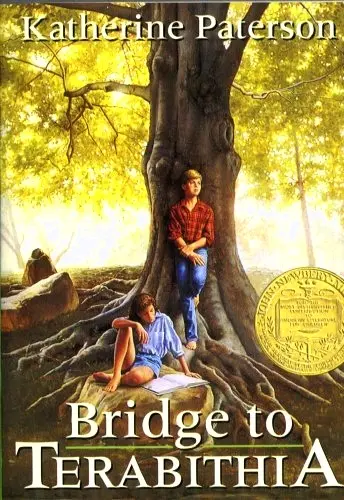
Short summary, you should read it, you should read it at any age. It is a book for children, but it respects the reader and its characters enough to not soften reality for them. Reading this book at a young age might be difficult, but the pleasure of having morality, character and goodness outweigh the pain one might experience from the plot events.
< SPOILERS BELOW - SERIOUSLY, READ THE BOOK FIRST, IT'S PRETTY SHORT >
< YOU SURE YOU READ IT? >
< I AM ABOUT TO RUIN THINGS FOR YOU! >
< LAST CHANCE! >
When I was in 4th grade (almost 20 years ago) our teacher read this book to us aloud. I remember how we all enjoyed it so much, and just how floored we were by the death. Life is funny, I remember being far more disturbed by the death of Leslie in this book than I was by most anything else at the time. For me, this was probably the book that cemented the notion of death. I had read (consumed more like) many books that had deaths in them. Most of them were "bad guys", occasionally it would be someone close to the hero, it didn't really hit you: Leslie's death hit me. I don't really have much to say about it, but I consider that the mark of good writing: allowing the reader to vicariously experience a state of being (emotion?) that they have not yet experienced themselves.
As a adult, having known many people who have died, I was actually surprised at just how literal and real Jess's account of the grieving process was. As a child, I wonder if I understood that he was in shock? Did I think he was a psychopath or slow? Perhaps I agreed with his sister and though he was some sort of monster? Until you have experienced death yourself, the way people react to the loss of someone close to them can seem very foreign, very alien. I don't really know if the process can be explained. You can describe it, you can even first person narrate it, but it is difficult to communicate. I liked how the author never specifically said something like "Jess is in shock, this is a state of reduced responsiveness and ...". Instead, she just let Jess be Jess, described him in such a way that his memory and actions seemed disparate, confused, calm, disassociated. She let the narrative speak for itself. Whether a child reading this book can understand these ideas depends on the child, but regardless of whether they "get it" or not, I think it certainly opens their eyes to something deep and true. Gives them something insightful and real to think about.
I also enjoyed the relation that Jess had with his father. It was not good. His father was not a bad man, but was not up to the task of raising Jess and supporting him the way he should have. I liked that he and his father became closer at the end, opening up just a little, without it going full blast and fully resolving like daytime television.
I liked that Jess was occasionally small and shallow, and was literally taking on the character and mannerisms of his environment. You could almost feel his desire to "leave" his world, but he would never have had the strength to do so without Leslie. I really enjoyed how Leslie was shaping Jess into the person he wanted to be, allowing him to distance himself from his surroundings, both in the form of escape and through discovery. And they were doing all of this by just being good friends to each other.
Anyway, good book. It is one of those books that I really hope I have the chance to discuss with a child someday. I think, yes, it could lead to a few nights of troubled sleep, it could scare them a little in the short term. But the knowledge and understanding they get from it, and the depth of discussion they could gather from it, make the cost entirely worthwhile.
P.S. There is also a really good 2007 movie based on the book, you should check it out.
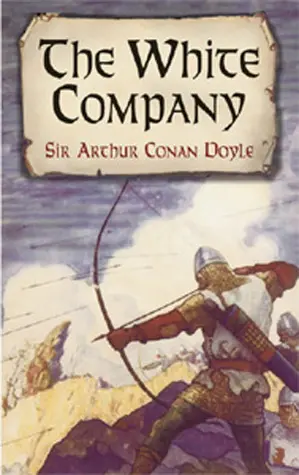
When I read this book, I really thought it could be made into a tv show and then movies. The beginning of the book is written in small scenes, Alleyne has just left the monastery and has entered the world. Observing the different aspects of life, he recognizes the harshness and beauty of life all around him, but still colors everything he sees with his monastic upbringing. Each scene is a small story, you get Alleyne's view (and eventually that of his companions); it is left to us as the reader to determine which view is correct. TV show wise, each scene would take around 20 to 40 minutes.
The book makes a roughly linear progression from small scenes to longer stories as it progresses. Even the longest stories, which span multiple chapters, could probably fit in a movie length time budget. I will stop prattling about the episodic nature of this book, it was just a observation.
Fundamentally, this book is just a good adventure story. A (monastery) youth is let out on the world. He sees everything for the first time, life is new to him. We observe a change in him as his monastery upbringing confronts the base reality of life. Thanks to his companions, he also begins to question the sanctity of being sinless by removing oneself from sin. A man who removes himself from the world may be sinless, but by his actions, he has removed himself from the world, and thus may not improve it. Lots of fun things to think about there.
Then there is the chivalry. A difficult concept to our (well my) western sensibilities. The thought that there was honor to be gained by fighting, by dying, by committing yourself and your men to war is a ... well... for lack of a better word, disturbing idea. Assuming all present agreed to it, and all served voluntary, I suppose there is no evil in groups of people coming together to do war on each other. In this book, in this world, fighting was done by agreement of all present (with the exception of the jacks). Still, you cannot help but think to yourself , "Wouldn't Nigel's time have been better spent guiding the growth of his kingdom, rather than engaging in pointless wars?" I also often thought about the fact that the royalty was of course going to be ransomed if captured, while a ordinary soldiers is probably best off running for his (literally) worthless life. Kind of makes the incentive system for this stuff a little lopsided doesn't it? Chivalry is almost a religion in itself, you take it on faith (or group consensus) that there is this concept of honor to be gained through personal combat and war. I suppose if everyone believe it, then that makes it true? I mean, it is nothing but a social construct, and if we all agree upon it as a society, is it not so?
Anyway, this review/commentary/whatever has become too long. This is a fine book, you should give it a read. I think I might have enjoyed it even more had I read it in my early teens, but even as an adult, it held my attention throughout. It does not have a long sweeping story, choosing instead to focus on one distinct scene at a time. This allows most scenes to be read, consumed and reflected on, very similar to a parable.
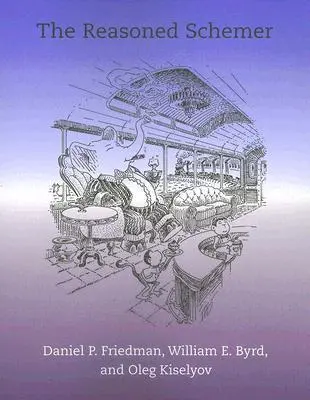
I gave this book 5 stars, but as this book is in a complete category of its own, that is kind of a technicality. The Reasoned Schemer is a book that introduces you to the notion, usage, and application of logic programming. It is entirely structured in a question/answer format, which slowly introduces you to all the base "control" structures you would need in logic programming.
Non logic programming basically works from the notion of imperative data flow. This is generally represented by the concept of a function. A function takes a argument and returns a value, it takes input variables and returns output variables. A logic program creates a relation (not a function) between a set of variables. If you had a two input function, with one output, you could represent this as a logic program relation of three variables. Two of those relation variables would be what were the two inputs to the function, the third variable would be the output of the function. Here is the kicker though. You can provide concrete values for any number of those variable in any order and ask the relation what the other variables might be. At the simplest level, this means that you might run your function "backwards" (from the output to the input). But really, it means that you can ask any question relating to those variables (conceptually). Now, realistically, it is not as easy as that. Some relations may never terminate (return a answer), some grow too large and barf (overflow), some may not complete for various other reasons. It can be more complex to actually write a logical relation than a function, this must be balanced against the fact that the relation is far more powerful than the function.
If you want a primer for logical programing, this book is probably worth your time. It takes you through writing many of the fundamental parts of a logical relation. The only thing I think it really skips is the actual unification (= x y) primitive itself, which I believe it uses as a given. You can learn quite a bit by reading this code slowly and carefully. Note however, that you must complete every step of the question/answer pairings! Skimming this book will not work (unless you already know it). Really, these concepts build on each other. It is a rather small (page number and physically) book, but it will take far more time to really go through then its size would suggest. Read and work through for the purpose of understanding, and I think you will really get a good backing in logic programming, and probably enjoy yourself as well!
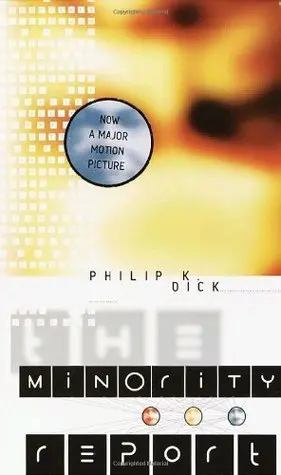
Technology wise, this story and "Paycheck" (also by PKD) are very similar. If you read this one, you might want to read Paycheck for contrast.
Writing is clean and accessible. In typical PKD fashion, the characters don't have a great deal of backstory, and are not that emotional in general. The strength of this book is not so much even the plot, but the idea.
The idea is simple... Oh, you should stop reading right now if you don't like spoilers at all. Seriously, go read the story, you can do so in about a hour, I will wait.
Back? Ok, as I was saying, the idea seems pretty simple. TMR relies on the fact that the precogs (as an aggregate) can see the current future. Precrimes stated goal is to look at this tracked future, and derail it a bit by preventing the crime itself. They then take the person that would have committed the crime and put them in a internment camp of sorts.
Well, ok. There are some fairly large paradoxes there, but I am not going to argue them as you can get them all by reading a "Back to the future" forum. :]
The big idea from this book is that there was no Majority Report this time, there were only 3 separate minority reports. Each minority report was a different snapshot of the current world. In general, the snapshots of the current world do not materially effect the world, as the snapshot information is only known to Precrime, and they only use the information to stop a crime.
If Precrime were to publish the list of people who would be murdered the next day in the paper, it would effect those people; they would make changes to their days and probably stay alive. The crime would never have been committed. However, Pre-crime does not taint the current state of the world by revealing information, they only change things right before a crime is to be committed. This allows them to actually assume that the crime was going to be committed, arrest the guilty, save the victims.
In this case though, the world was being tainted by the reports. Anderton was implicated in the reports, which he read at various points in the story. Each time he reads a report, he read about a new snapshot of the world. Each time he reads of a snapshot, it causes him to react (derail) from the actual report. Each subsequent report was actually a recursion of the previous state of the world + the state of the world given the reports that Anderton had read. One can see this process going on forever, a new report always creates new information for Anderton to react to, causing the need for another report to actually be generated in order to know what happens. The rub is though, by reading it, you are effecting what should have happened, and the report is now invalid again. Presumably, the best you can do is create a report, never read it, and then let Anderson commit a crime (or not?). You know who did the crime, it will say so on the report, but you have no way of really stopping him. This would be a logical though morally questionable tactic.
Anyway, it is the idea of recursion and side effects (tainting) that make this story fun. If you stop and think about it, there are some serious paradoxes going on here, as well as some questions about the nature of crime and punishment that are worth considering. Still, who cares, it is a story that gives you something worthwhile to think about, and does so in about a hours worth of reading. You don't need to know the future to know that is time well spent.
This is a very short story, so it will be a short review.
Paycheck is clear, clean writing. It actually fits in quite comfortably with The Minority Report by PKD as both deal with the ability to see events that have not occurred yet. I suppose the technology in Paycheck exceeds that in Minority as they are also capable of "reaching" into the future, not just observing it from the past.
The book was a little dry. Anachronisms littered the story like punchcards in a modern data center (terrible). It also suffers from the Deus Ex Machina problem of having a guy who knows the future providing you tools to deal with the present. Whatever. It is good, very short, and a fun read. Nothing profound, but fun.
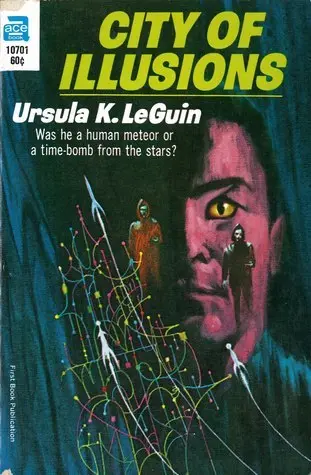
Odd things this novel. I have also read "The Lathe of Heaven" and "A Wizard of Earthsea" by Le Guin, just for comparisons sake. This one read much more like "Wizard". The book is strange, not a challenging read, no huge word building, strange vocabulary, or anything like that; just nuanced. The story basically reads like a travel narrative. Guy run around, meets native tribes, ends up on a path of self discovery.
Anyway, I don't have anything terribly insightful to say about this story. I get the vague impression that the different tribes where supposed to be some sort of representation of different sociological/anthropomorphic though experiments. Hell, I am talking out my side here, but it is what I sorta gleamed. I won't talk about them any more in order to not taint your expectations, but if you like stories where characters interact with socially different types of people, this isn't half bad.
Some of the tribes also had different ways of handling the stagnation of society; I thought that was interesting. Fun to think of all the different ways a society can calcify after it looses the ability to advance itself.
Ok, the main thing I got from this book, the big idea (at least for me), was the idea that a honest man has strength in a civilization of liars. I don't know if that was the intent of the book, but it is what I thought about after I finished it. I wish I had something really intelligent to say here, but I don't. It is just something you will have to read on your own, and reach your own truths about. It is not just a question of being able to distinguish truth from lie based on what you know to be true, it it also a question of the liar not being able to benefit from your truths, as they expect lies. Bah, those thoughts don't quite stand up on their own, but they are approaching the grain of what I am trying to say. Lying is actually more difficult than simply saying the truth. Reality is in fact complicated, a truthful person is actually better able to face reality, because they don't have to factor the reality + their body of lies into the equation. A liar will inevitably become perverted by their own lies, incapable of distinguishing between their lies and the actual truth. Nothing profound here, just fun to think about, with actual characters.
So, quick review. Yes, it was a good book. I like books that give you something to think about afterwards. It is also a short read, so regardless of whether you like it or not, you won't have wasted too much time. If you do like it, it will probably give you something to think about, if you let the ideas percolate a little. If you don't like it, well... read something else!
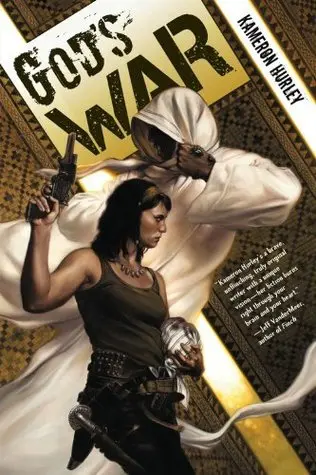
I was mixed on this book. I think at some level we all enjoy reading books about characters we can relate to, problem is, these characters are difficult to relate to. Nyx is a pretty one dimensional character, she operates from a position of stubbornly moving forward while doing her best to avoid contemplation of her current actions or her past. This gets tiresome. I couldn't tell whether Rhys was a coward, or just had a aversion to violence. It really made me question why he stuck around with a bounty hunter, seemed kind of dumb.
The world was initially interesting, but then I became disappointed that it wasn't really explored or explained. I don't get why people are excited by the bug-tech idea. People keep saying she has built a new world with bugs? The bugs are just a substitution in this book: It appears that it is just a substitute for magic and technology. The bug tech idea was never clarified or elaborated. What does it feel like for Rhys to use bug tech? How did these remarkable bugs come into being. Do people know or is it just not asked, hard to tell since they never explore the question in this book? It was sort of implied that the bugs might be manipulated with pheromones: why can't it be replicated then? I mean, if you are going to have a world where bugs are basically used as scouts, observers, communication antennas, shields, attackers, defenders, cars... well, everything basically: it would be nice to invest a little in explaining them. Spend a little time explaining their characteristics and limitations.
I was also annoyed by the organ selling part. What was that about? How can we be capable of doing genetic manipulation, in space flight, genetic force fields, but we are still buying organs wholesale from people? It would be like killing a buffalo in the wild when you could just buy a cattle at the market. It would be orders of magnitude more expensive to harvest organs vs just industrially cloning them. Totally confused me.
The fact that people can have their brains blown out and then be reconstituted without brain damage (or at least memory loss) was pretty ridiculous.
I also failed to grasp how the world politics stood on its own. How can two countries honestly invest in killing 90% percent of their men in a senseless wars? Why was there no mention of strategy or logistics? The war seemed really forced, like it couldn't exist without some serious players who are willing to strongly sacrifice in order to perpetuate it. It just felt unstable. Why would anyone have a interest in perpetuating this war when it clearly cost so much to everyone involved? I felt that it was implied that it was a self perpetuating war, but such a fragile dynamic system would not seem to end in a stable state like the book implied. It bugged me (no pun intended).
Why would people not be rallying in the streets over having to sacrifice their children to a war whose cause no one could remember? Why did they not use birth control to avoid having male sons? The breeders also bugged me, as a artificial womb would seem to be far more cost effective.
Finally, lets move out of the world building and "new ideas" review of the book. Some of the plot elements were just ridiculous.
**** SPOILER * DON'T * READ * HERE ****
Nyx was able to bed Jaks by betting in her favor on a fight? This is evidently a guaranteed thing? Jake is housing her draft age brother who WILL BE KILLED if he is discovered. Jaks brings Nyx to her house and lets Nyx see her brother? Really? That is so dumb it is just beyond belief? It would be like a frenchman inviting random strangers to dine at your place when you are sheltering Jews during WWII.
Khos getting to overhear Dahab tell Khos about Nasheem (sp)? I mean really. If you are charged with securely protecting someone in hiding, probably first rule of thumb is don't go blabbing their name in front of perfect strangers.
Khos and team twice rescuing Nyx from the bell dames or intergalactic gene splicers. Really, has no one ever heard of posting a sentry? Is Nyx's team just totally badass, because they are implied to be barely scrapping by? However, every time rescue or fighting is needed, they win without any superior strategy or equipment.
Why didn't Rain have more muscle when he was trading with Nyx? Seems like he could have afforded it.
How did Rain scoop up Rhys so easily? How did Rain know where Rhys had gone to?
Isn't it convenient how Khos happens to be some sort of underground railroad hero, and as such has a safe-house everywhere you go? Really, we should be paying him more. :)
YOU CAN READ NOW ********************
Ultimately, I felt a lot of the characters were rather flat. I also felt the environment felt more like a backdrop than a actual place. Things did not seem very well thought out. If your cup of tea is basically a character that fights, gets their ass kicked, and then kicks more ass in retribution then ... umm... this is your cup of tea. If that is what you want (and you want your protagonist female) then this book rocks. If you like more to your stories than just that, I would skip this one.