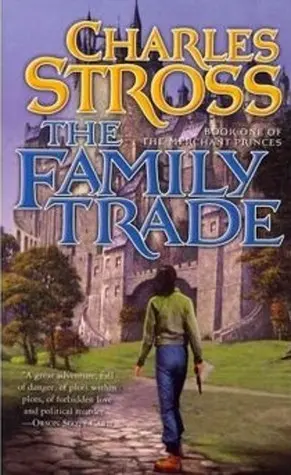
Awful. Just awful. This is a bad Harlequine Romance novel wrapped in the thinnest veneer of Sci-Fi. Let me transcribe some of this crap for you...
> "You're beautiful."
>
> "I bet you say that to every naked woman you wake up in bed with."
>
> "No", he said in all seriousness. Before he realized what he'd done. Then he turned bright red. "I mean", he was too late!
>
> [Name Redacted to avoid spoilers], "Got you!" she giggled, holding him down. Then she subsided on top of him.
What. The. Fuck. This is some of the more event driven "dialogue" in the book. When our Mary-Sue-Wonder-Bread-Social-Warrior isn't spending most of her day conducting internal monologues about how she feeeeels at every moment, we get the treat of listening to this level of dialogue between herself and her compatriots.
Enough about the dialogue, let me get into the parts of the book I really hated.
HERE BE SPOILERS
Understand the culture you are in.
I really dislike it when literature treats other races/cultures/peoples by only characterizing them by the mores and beliefs that we disagree with. It is just so one sided, so arrogant; really gets my heckles up.
In this case, I was just flummoxed how our heroine is able to just waltz in and start instituting change without anyone being able to touch her because she can outfox them due to her free market understanding of how the world really works.
Question your environment
I could not buy that an investigative journalist expressed no real interest in figuring out how the locket/worldwalking worked. It just blew my mind. She didn't even ask if anyone had ever done any research on it! Come on!
Hell, I would have given her a pass if she had at least bothered to figure out the parameters, the limits of this thing. Nope, the second she figured out that it could work, we were done. After discovery, she never again bothers to test the limits of the system, to question why there is a mass limit, why do you get headaches, is their conservation of momentum? Nothing. It was just so... I just couldn't believe this. It is a good thing she dropped med school, she would have been a terrible doctor; doubt she could diagnose a cold.
Nobody cares about your feeeeeelings
I was so sick of hearing how she "wasn't going to allow them to ...." or "Let them try to get me to ...". As a verbal tick it gets old fast. The forever monologues as she connects her painfully slow reasoning made my eyes water.
The book just ends
Literally nothing is resolved at the end. It just ends. Asshole. In terms of interest, it is just dull for about 85%, then you have 10% of rising interest, and then you have a 5% ending where you realize nothing is going to complete. Wow, that made me angry.
END OF SPOILERS
I really have a hard time believing this is the same guy who wrote "Accelerando", "Rule 34", hell even "Neptunes Brood". Amazingly Bad.
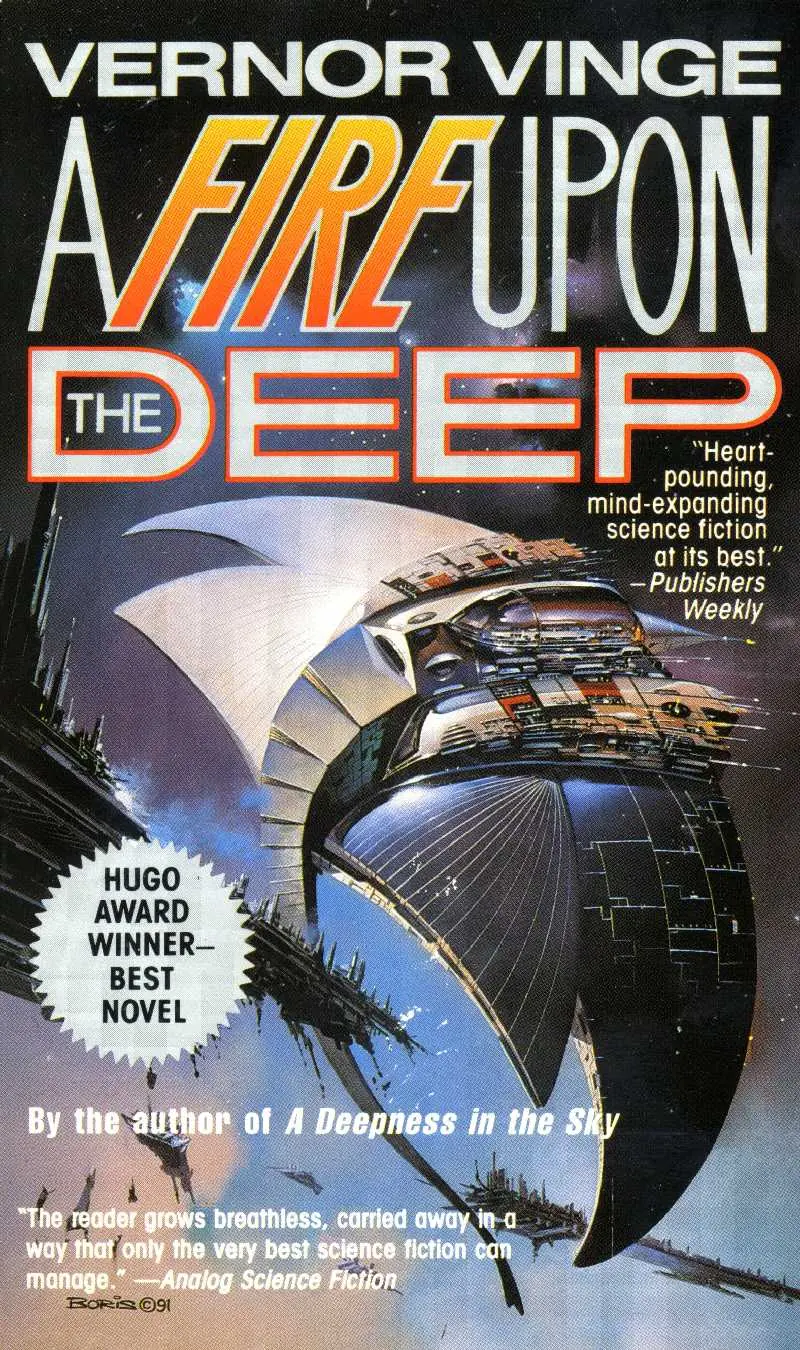
Big idea here is that the Universe is a spectrum of fast to slow zones. In fast zones we have access to "higher" levels of computation, in slower zones the exact same machinery will become buggy or nonfunctional. It was never specified exactly what computations you can do in higher zones that you cannot do in lower zones. The important side effects of this though are that higher zone allows self aware AI and allows ships to jump between the stars. Lower zone have no self aware machinery and requires that you actually travel between the stars at only a small multiple of lightspeed. It is strongly implied that humanity/Earth may have come from a lower zone. That is very rare, as most "higher zone" aliens actually accend by being contacted by a more evolved aliens. Humanity may have actually manually made the voyage to higher zone from lower zone without outside intervention, though most aliens would regard that as unlikely.
In the highest zones (the Transcend), there are AI's that are basically Gods. Within their zones they have almost unlimited power. Although ultimately constrained to the higher zones, the projection of their power extends to lower zones. Fortunately, most AI's in the Transcend quickly loose interest in the going on's of life in the lower zones. Metaphors fail in terms of applying lower zone reasoning or emotion to a God, but you might say that it is considered perverse by most AI's to be at all interested in the life of lower real beings. They view us the same way human beings might view insects. Some human beings actually have pity and take interest in insects, but the majority simply leave them alone as they have no real interest in them one way or another. I liked that part of the story. I like the idea of an AI that basically isn't even evil, it just does not care because you are beneath it's notice.
I liked the idea of the Zones. I liked the idea of all intelligence (from virus all the way to Artificial Intelligence) basically being some form of computation. The lowest zone, known as the "Unthinking Depths", does not even allow biological species to achieve sentience. I liked the way Intelligence was just quantified as being something that is only limited by physics. It was a neat idea.
The other big idea I liked was the Tines. The Tines are an alien species where each "person" is made up of 4 to 8 members. Each of these members looks something like a greyhound (at least in my mind). Each member is a distinct organism, but is usually not capable of any advanced thought. Members communicate at the speed of sound by constantly talking to each other. Once a group of 4+ members forms and acclimatizes they will become sentient. In doing so, the new "person" is a combination of the personality, characteristics, and skills of all its constituent members. Once a member joins, they almost never leave a group; it is not a confederacy of members, it is a person that came to be because of it's constituent members. I really liked this idea. I thought it was a very creative way of thinking about some new type of intelligence. A intelligence that came to be in a different way and for a different reason than human intelligence. It makes me think of split brain patients, how they are one person, but in some (very unscientific) sense of the word have two brains. I really liked how the speed of sound was a limiting factor to their group intelligence. I recollected some of the amazing feats of plasticity that the human brain seems capable of. What would the result be of linking seperate human beings brain-to-brain with radio? It also made me think a good deal about how similar thinking about an experience is to actually experiencing it. Imagine, in a Tines group (person), one member has his nuzzle in a flower, breathing in the pollen. He is communicating the sensation to the other members in his group. For all intents and purposes, they all simultaneously have their nose in that flower. It is a really interesting idea. I think of intelligence as being singular, but must it be? What would it mean to have trully parallel intelligence? Where each "node" is broadcasting and receiving everything it experiences and thinks to every other member in the group? It sounds wonderfull.
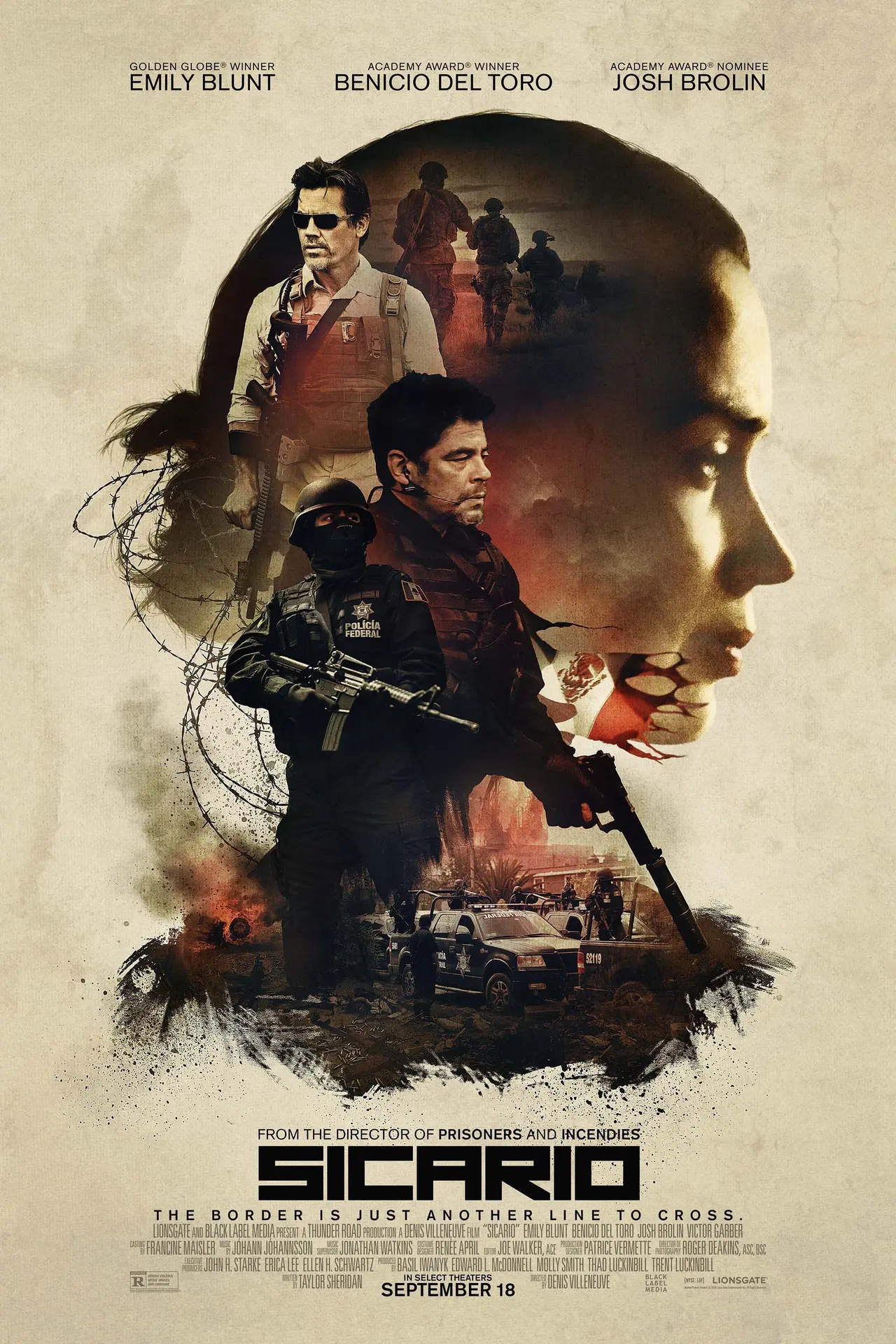
Saw "Sicario" this evening. It was a pretty decent flick. Remined me a bit of the submarine movie I watched a while ago called "Black Sea"; left you with the same tense feeling in your neck. I guess, I guess I enjoy movies like that. I like movies where things are just building up slowly, where tensions are being accrued. I think I also respond to the idea that this is everyday life for the people in these films. I wonder how I would (or if I could) handle those sort of situations.
I guess the take home message of the film is that the only way to deal with lawless entities like the Cartels would be to meet them with violence. The state, as a system of laws, is not really capable of inflicting the sort of violence neccessary to check them. The state therefore looks to outside contractors to do their violence for them. Is this acceptable? Is the result actually better? Is the premise even sound?
I did enjoy the contrast between the clean cut FBI agents and the result driven CIA agents. I can't honestly decide who is right in these sort of situations. Of course, I don't know whether the movies portrayal of each side correctly personifies reality. It was still an interesting character study.
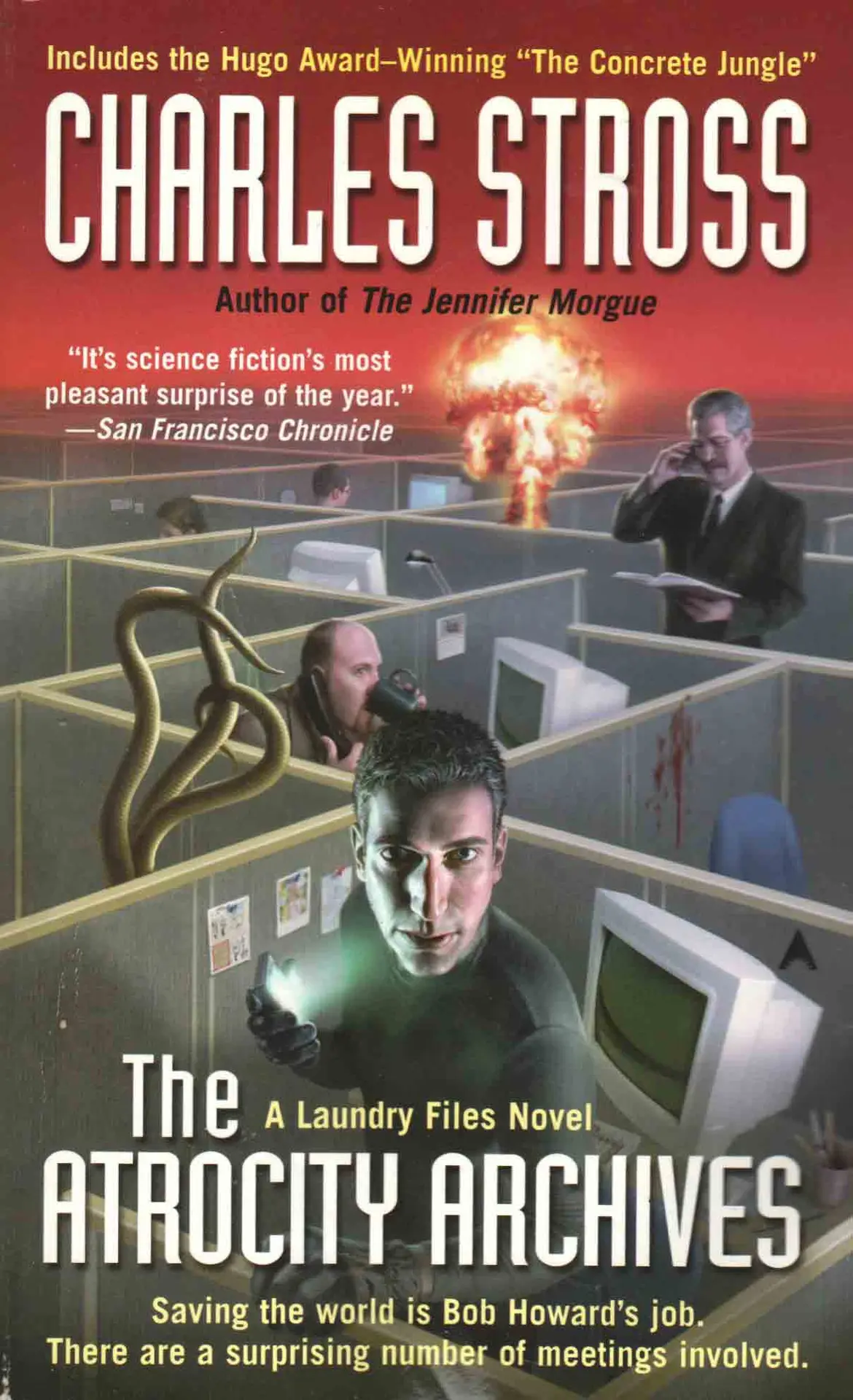
Wasn't bad. As a time saver, I would almost recommend reading it in reverse.
This book contains three parts. The first part is 3/4 of the book or so "The Atrocity Archive". The second part is a short story in the same world with the same character within "Atrocity" called "The concrete Jungle". The last part is a reflection by Charles Stross about books of this nature.
So the last part of this books waxes philosophical and otherwise about the nature of a book like this in the world. It is probably what you should read first. If what is described within sounds interesting to you, then read from the beginning. If it sounds awful, then read something else.
If, however, you aren't sure, then I would recommend reading the second story "The Concrete Jungle" first. Did you like that? Then you will probably like the first (and much longer story) "The Atrocity Archive". There, I made efficient use of your time.
Personally, this really wasn't my thing. If felt too much like Star Trek dilithium-crystal-deus-ex-machina kind of mumbo jumbo to me. To be fair, I don't enjoy horror (maybe it is a lack of imagination), so I may have just been skimming when I was supposed to be enthralled.
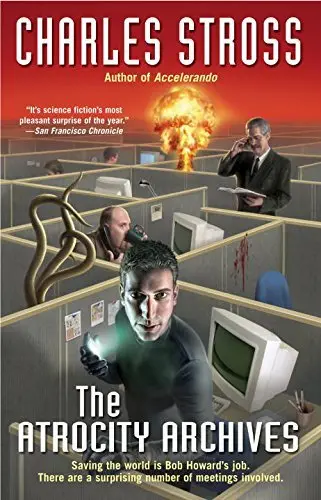
Wasn't bad. As a time saver, I would almost recommend reading it in reverse.
This book contains three parts. The first part is 3/4 of the book or so "The Atrocity Archive". The second part is a short story in the same world with the same character within "Atrocity" called "The concrete Jungle". The last part is a reflection by Charles Stross about books of this nature.
So the last part of this books waxes philosophical and otherwise about the nature of a book like this in the world. It is probably what you should read first. If what is described within sounds interesting to you, then read from the beginning. If it sounds awful, then read something else.
If, however, you aren't sure, then I would recommend reading the second story "The Concrete Jungle" first. Did you like that? Then you will probably like the first (and much longer story) "The Atrocity Archive". There, I made efficient use of your time.
Personally, this really wasn't my thing. If felt too much like Star Trek dilithium-crystal-deus-ex-machina kind of mumbo jumbo to me. To be fair, I don't enjoy horror (maybe it is a lack of imagination), so I may have just been skimming when I was supposed to be enthralled.
- Anathem
- Snow Crash
- Cryptonomicon
- The Diamond Age: Or, a young lady’s illustrated primer
- Seveneves
- Reamde
- Quicksilver
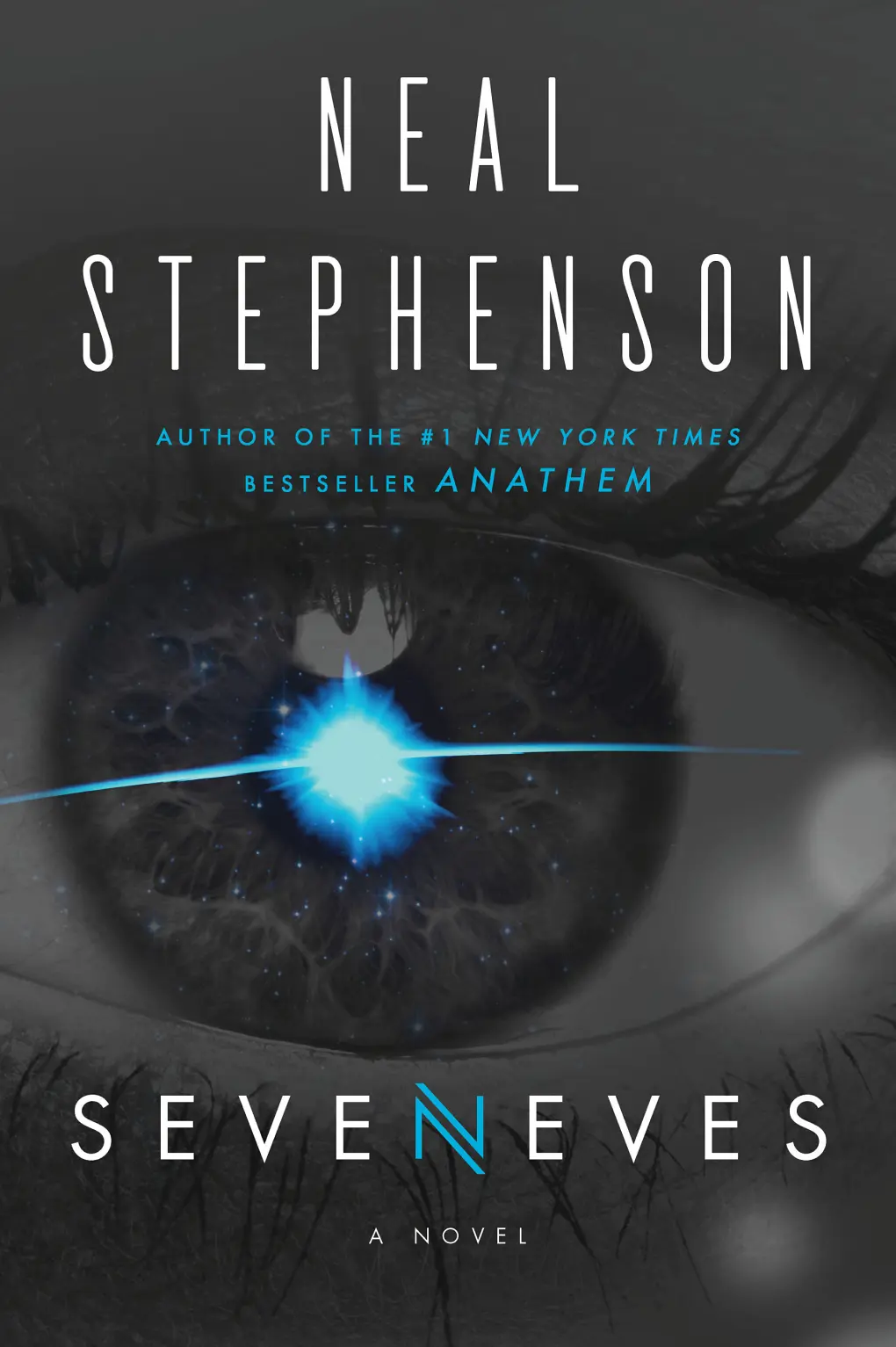
Yeah, it isn’t my favorite book of his by any means. Still, it is a Neal Stephenson book, so it is pretty good.
There was some neat ideas about spaceships that are basically bollas and whips, and I suppose this book introduced me to the idea of the Lagrange Points; kind of cool. I was also taught about epigenetics, which I figured was made up until I looked it up.
My main issue with this book is that it feels at times like he forgot that you need to actually tell interesting stories about people. Seems that as he gets older (Reamde and Seveneves) Stephenson has become more technically obsessed. This is fine, but some segments of his novels are somewhat tedious to read through. I read sci-fi for two reasons. Foremost, I always hope to be exposed to some new idea or thought. Second, I enjoy out of this world stories. Stephenson always delivers on the first, lately I feel that he is not giving his full attention to the second.
A large amount of this book reads a bit like a technical manual for getting humanity into space. I seem to be reading more authors in this style. Seems to be a resurgence in the “hard” sci-fi of the past. Most recently I have read the “Bowl of Heaven” by Greggory Bentford and Larry Niven as well as “The Martian” by Andy Weir. My feelings about this “hard” sci-fi genre is always mixed. On one hand, it does seem a little more relevant if the technology mentioned might someday exist and could, to the best of our knowledge, work. However, realistically, I think we are talking about relative things here. In darts, if you miss the board, you missed the board. The fact that you may have hit the wall rather than the floor may mean you are closer to the board, but you still completely missed it. Similarly, I think hard sci-fi may be closer to our actual future than space opera is, but the magnitude between either of them and reality will be so great as to make them both seem equally ridiculous.
I think sci-fi is most effective when it takes an idea (the singularity / time travel / gestalt consciousness) and builds a compelling story about it. I don’t think it is of particular importance that the idea be currently feasible according to our current understanding of the world. It is cool when it is, but still, this is fiction, use your imagination.
- Anathem
2) Snow Crash
3) Cryptonomicon
4) The Diamond Age: Or, a young lady’s illustrated primer
5) Seveneves
6) Reamde
7) Quicksilver
Yeah, it isn’t my favorite book of his by any means. Still, it is a Neal Stephenson book, so it is pretty good.
There was some neat ideas about spaceships that are basically bollas and whips, and I suppose this book introduced me to the idea of the Lagrange Points; kind of cool. I was also taught about epigenetics, which I figured was made up until I looked it up.
My main issue with this book is that it feels at times like he forgot that you need to actually tell interesting stories about people. Seems that as he gets older (Reamde and Seveneves) Stephenson has become more technically obsessed. This is fine, but some segments of his novels are somewhat tedious to read through. I read sci-fi for two reasons. Foremost, I always hope to be exposed to some new idea or thought. Second, I enjoy out of this world stories. Stephenson always delivers on the first, lately I feel that he is not giving his full attention to the second.
A large amount of this book reads a bit like a technical manual for getting humanity into space. I seem to be reading more authors in this style. Seems to be a resurgence in the “hard” sci-fi of the past. Most recently I have read the “Bowl of Heaven” by Greggory Bentford and Larry Niven as well as “The Martian” by Andy Weir. My feelings about this “hard” sci-fi genre is always mixed. On one hand, it does seem a little more relevant if the technology mentioned might someday exist and could, to the best of our knowledge, work. However, realistically, I think we are talking about relative things here. In darts, if you miss the board, you missed the board. The fact that you may have hit the wall rather than the floor may mean you are closer to the board, but you still completely missed it. Similarly, I think hard sci-fi may be closer to our actual future than space opera is, but the magnitude between either of them and reality will be so great as to make them both seem equally ridiculous.
I think sci-fi is most effective when it takes an idea (the singularity / time travel / gestalt consciousness) and builds a compelling story about it. I don’t think it is of particular importance that the idea be currently feasible according to our current understanding of the world. It is cool when it is, but still, this is fiction, use your imagination.
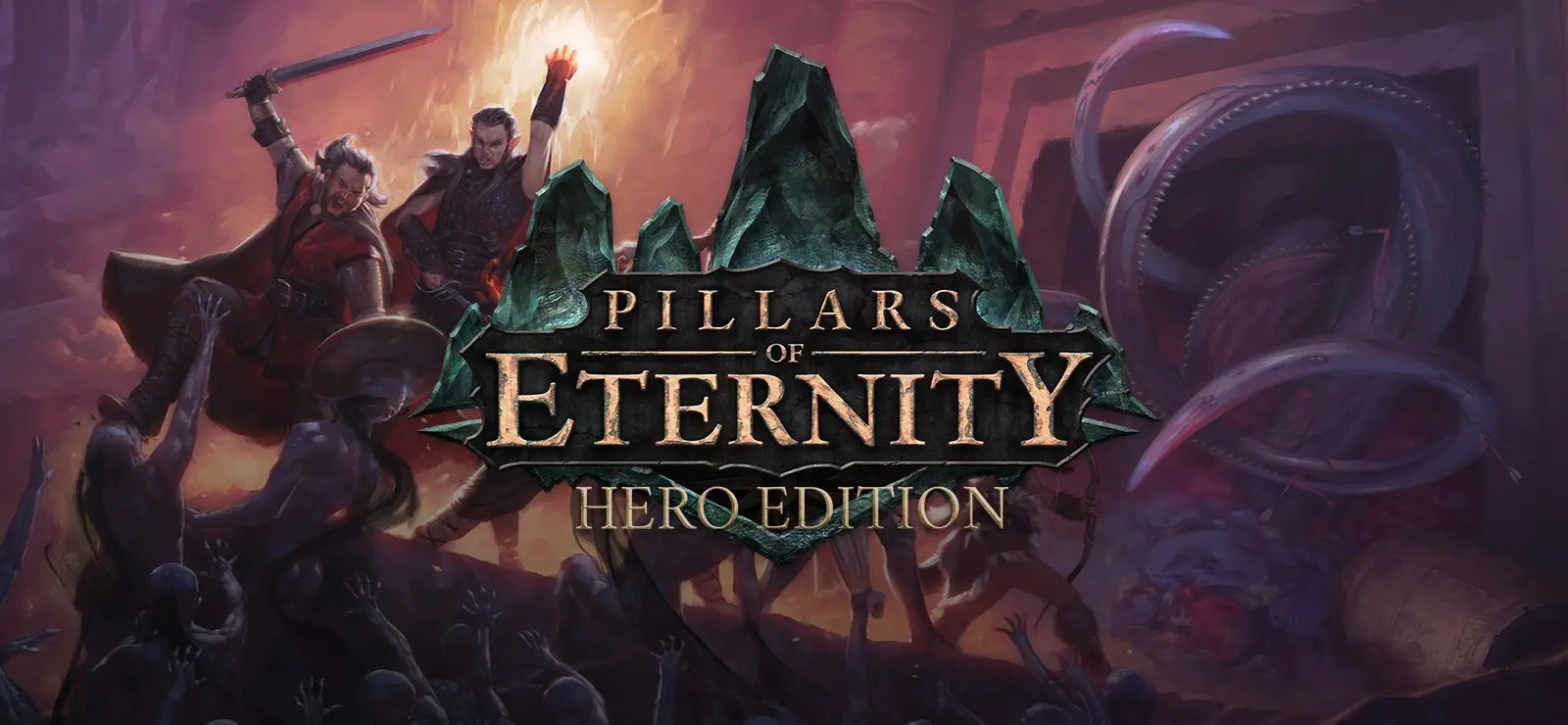
Yes, it took me about a year and some change to finish this game. Game saves say that I have played 60 hours, so if you include the restarts and other losses, it was probably around 80. That is a massive investment, on the other hand, it is spent among 500+ days.
Put simply, it is a great game. Because of the massive amount of time between different plays, I sometimes was a bit sketchy on exactly what was going on. The story is fairly open ended, but is streamlined enough that it gets you back on track fairly often.
tldr; you should play it
EVERYTHING BELOW MAY CONTAIN SPOILERS, LOOK AWAY MORTAL!
I played as a chanter, pretty enjoyable class but really not too useful until later in the combat rounds. I imagine the most powerful team would be made up entirely of fighters. Chanters become good as soon as they are able to summon additional monsters, but this can take a while. I played with all the companions but I imagine the best grouping would be something like 4 fighters and 2 chanters. The fighters are there just to soak and deal damage, the chanters are there to summon ogres and fire everyone up. Anywho, it isn't too important, on the difficulty I played upon (normal), none of the fights are so bad that you need to do too much. Adra Dragon is only real challenge.
After finishing the game (and then reading the wiki stuff) I was surprised to discover I had completely missed the Pallegina Companion. I remember the interaction, I wonder how I was supposed to get her.
As per usual, I attempted to complete everything. I mean every quest. I believe I was almost completely successful except for Durance, who I could not couple therapy talk into sanity. I just couldn't find the dialog options to get him to open up, although evidently they were there. Because of this, he burned himself on a pire made of his own staff. I'll miss him, but by the gods (Magran in his case) he was an annoying ass.
Because I received every god's boon I also unleashed terrible suffering on the world when I failed to live up to my agreements with most of them. I did the hunters god's ending, returning the souls to make future generations stronger. I didn't feel bad about breaking my word to the Gods. Gods are the equivalent of large corporations in my mind, you just don't extend the same courtesy to them that you would to a human being. I feel as bad about defrauding or abusing a corporation/god as it would feel about doing the same to me. Not much.
I won't say that I was entertained at every moment in the game, but I can say that as a whole I enjoyed every larger segment of it. This was a masterly done game by very skilled and passionate people. Kudos.
To be more enjoyed, you really should play the game at a stronger (like an hour a night at least) pace. I think the most ideal way to play this game would be on the trans-siberian rail line. It would be awesome, look out the window and imagine your adventure when you need a break. See the local sites during the day. Evenings and nights progress 2-4 hours in game. Man that would be neat.
Finally, I will talk about the ending. I thought the pacing and plot changes at the end were the best part of this game. All through the story, you were seeing this Thaos guy and thinking him some fundamentalist worshiper of an out of favor goddess. At the end, it is revealed that he isn't fundamentalist, in fact, he is one of the few people who actually knows that the gods are a fabrication of man. He isn't empowering his god for her glory, he is doing so for the future of mankind. It was an interesting argument. Would humanity be better served believing in gods? Gods that give their life meaning and purpose? Or is it better to face the simple (though barren) dust to dust truth of existence? I have to say I was somewhat sympathetic to Thaos' cause. That is good writing. I wouldn't myself want to worship any god (real or false), but I feel that many peoples lives might be enriched if they had something more to believe in. Put in sci-fi terms, what if we could program AI's that could act as Gods to humanity, and then told humanity that they were real gods? Would the happiness and fulfillment that a great deal of humanity experiences from this be worth the lie? It is a good question. Ha, wouldn't that be a awesome sequel to PoE? turns out all "souls" are really just computational resources in some simulation. Gods are just assembled by putting together enough computation. I don't think it is going to happen, that would piss of so many fans.
Great Game.
I am in general a sci-fi guy. I would guess I read 70% sci-fi, 10% fantasy, 10% non-fiction, and 10% other. If you don’t count Sherlock Holmes, this is the first Mystery novel I have ever read.
What I really like about sci-fi is the ideas. I love when sci-fi gives me some new thought or viewpoint. I also think I probably enjoy sci-fi because of my desire for awe. Billions of stars, millions of aliens, a galaxy spanning civilization, those sort of things. So, given all this, what is there for me in the world of Mystery novels?
I guess there is cerebral pursuit. It is hard for me to tell. Can I really predict what is going to happen? Whodunit and how will it go down? Not really. In Science Fiction, you often don’t know what is going to happen because ANYTHING could happen. In mystery, the universe of possibilities is much more constrained, but it is still infinite. Does my ability to guess which of the 7 character is the murderer indicate my high deductive skill (as I would like to believe) or simply my familiarity with the author’s style? Mysteries have a reputation for being cerebral, but I don’t really think it is deserved. This isn’t to say that they are dumb, simply that I suspect your deductive skills have more to do with author/trope familiarity and less to do with actual reasoning.
I would like to know of any detective books where it is possible to deduce the resolution before the big reveal without ambiguity. Something that is airtight and closed in resolution. Maybe I have to go back and read things repeatedly, but if I hold it all in mind, and use my facts properly, I end up with the right answer.
Anyway, “Best of Families” was a pretty good book. I have no real basis of comparison, it kept me pretty entertained, the last 3rd of the novel was pretty interesting. I would recommend this book for a flight with a layover. I think it would probably be best consumed in a minimal number of sittings.
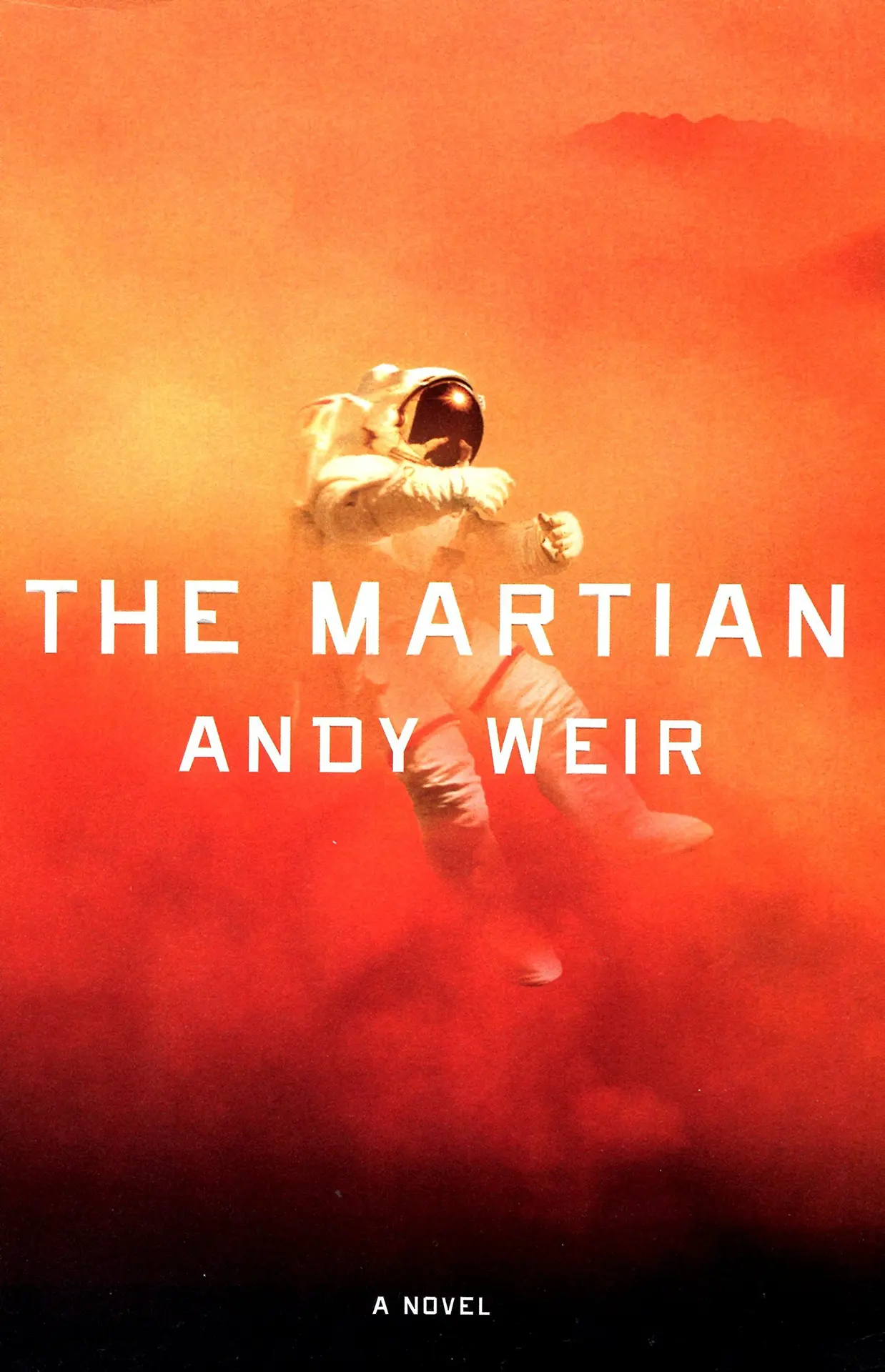
I told a friend I was reading this and he said this his friend described this book as “You know that scene from the Apollo 13 movie? Where they built a air filter out of duct tape? It is basically that scene repeated through an entire book.”
I thought that was funny, and it is a pretty good description of this book. Our intrepid martian is left behind and must use wit, will, and Watney in order to have any chance of a rescue.
I thought it was interesting that Watneys story was told with a “Captain’s log” mechanism, where he is narrating his survival for posterity. Foremost, because it is only a log, you are left in suspense about whether he will ultimately succeed or fail. Furthermore, because it is a log, it is his personal/intimate account; he is honestly not certain anyone will ever recover it. It allows him to be free to show self doubt or conflicting emotions. It feels more like a transcript of what happened and less like a packaged story, which I think was a desired effect. To contrast this, the events occurring simultaneously on Earth occurred with normal omniscient narration. It kind of gave the feeling that we were watching Watney at a great distance, only receiving his logs after they were occurring, while on earth things were happening in “real time.” Interesting.
I enjoyed the sciency stuff, but am not qualified enough to really critic it one way or the other. Having said that, it seems plausible based on my limited understandings. At least there was no unexplained magic.
Anyway, not too much to report here. I enjoyed it, you should read it, I hope the movie coming out soon will be good.
I told a friend I was reading this and he said this his friend described this book as “You know that scene from the Apollo 13 movie? Where they built a air filter out of duct tape? It is basically that scene repeated through an entire book.”
I thought that was funny, and it is a pretty good description of this book. Our intrepid martian is left behind and must use wit, will, and Watney in order to have any chance of a rescue.
I thought it was interesting that Watneys story was told with a “Captain’s log” mechanism, where he is narrating his survival for posterity. Foremost, because it is only a log, you are left in suspense about whether he will ultimately succeed or fail. Furthermore, because it is a log, it is his personal/intimate account; he is honestly not certain anyone will ever recover it. It allows him to be free to show self doubt or conflicting emotions. It feels more like a transcript of what happened and less like a packaged story, which I think was a desired effect. To contrast this, the events occurring simultaneously on Earth occurred with normal omniscient narration. It kind of gave the feeling that we were watching Watney at a great distance, only receiving his logs after they were occurring, while on earth things were happening in “real time.” Interesting.
I enjoyed the sciency stuff, but am not qualified enough to really critic it one way or the other. Having said that, it seems plausible based on my limited understandings. At least there was no unexplained magic.
Anyway, not too much to report here. I enjoyed it, you should read it, I hope the movie coming out soon will be good.

I am in general a sci-fi guy. I would guess I read 70% sci-fi, 10% fantasy, 10% non-fiction, and 10% other. If you don’t count Sherlock Holmes, this is the first Mystery novel I have ever read.
What I really like about sci-fi is the ideas. I love when sci-fi gives me some new thought or viewpoint. I also think I probably enjoy sci-fi because of my desire for awe. Billions of stars, millions of aliens, a galaxy spanning civilization, those sort of things. So, given all this, what is there for me in the world of Mystery novels?
I guess there is cerebral pursuit. It is hard for me to tell. Can I really predict what is going to happen? Whodunit and how will it go down? Not really. In Science Fiction, you often don’t know what is going to happen because ANYTHING could happen. In mystery, the universe of possibilities is much more constrained, but it is still infinite. Does my ability to guess which of the 7 character is the murderer indicate my high deductive skill (as I would like to believe) or simply my familiarity with the author’s style? Mysteries have a reputation for being cerebral, but I don’t really think it is deserved. This isn’t to say that they are dumb, simply that I suspect your deductive skills have more to do with author/trope familiarity and less to do with actual reasoning.
I would like to know of any detective books where it is possible to deduce the resolution before the big reveal without ambiguity. Something that is airtight and closed in resolution. Maybe I have to go back and read things repeatedly, but if I hold it all in mind, and use my facts properly, I end up with the right answer.
Anyway, “Best of Families” was a pretty good book. I have no real basis of comparison, it kept me pretty entertained, the last 3rd of the novel was pretty interesting. I would recommend this book for a flight with a layover. I think it would probably be best consumed in a minimal number of sittings.
Damn good movie, you should see it, lots of fun. You know that feeling you had as a kid when the circus performer jumps from one trapeze to another? This movie is like that through most of the running time. The bar for action movies has been raised.
There are a number of interesting topics to consider in this movie. The apparent rationality of seemingly irrational behavior given fundamentalist religious belief. The true nature of mankind when resources are scarce. The inclusion of strong female characters who are not trope bounded feminist. The kinematics of putting a ladder on the back of a truck and jumping onto another truck from it... while moving. All important topics worth considering.
However, I am not going to focus on any of those things. Instead, I will be an ass and focus on the one part of the movie that I didn't quite enjoy. The lack of appreciation for Immortan Joe from the film.
Don't get me wrong, Joe is clearly a really bad guy. Slavery. Violence. Rule by Force. Deception. Deification. This guy is no Saint. I am not going to defend him as a man. Morally, he is repulsive.
But so is every other Great Man in history whom we now worship. Caesar, Ghenghis Khan, Thomas Jefferson, Napoleon, you can just go on all day. Most of these men supported slavery. All of them were willing to force the sacrifice of other lives for their own ideals. Many of them either believed in or encouraged their own deification. By the modern measures of a moral human being, these people were all rather awful. And yet, the net benefit of the actions of most of these men ended up having disproportionate effects on our world. Truth be told, we are probably all better off because of the things they did.
I am not saying that the movie should have let Joe "win" (whatever that may be). I am just saying that it would have been interesting if he at least got to make his case for his own rule at least once.
I mean really, it is amazing that anything short of an actual god could perform some of the miracle he maintains on a regular basis. He has built an empire out of nothing but poverty, want and need. He keeps the vehicles running. He keeps the water flowing. He has raised and cultivated hydroponic fields in the freaking dessert. They have a limited but stable food supply. He was evidently able to pump water from below the earth. Joe obviously knows and values good engineering. Joe obviously understands the value of putting the right person in the right job. Joe evidently allows men and women to rise equally up to at least Imperator. There is large, complex, and maintained engineering at the Citadel. Joe has enough control over his society to maintain blood pools for aenemics for gods sake! I mean that is some high level administration. This is thanks to a charismatic and bloody ruthless tyrant like Joe. No arguments about the morality of it; these miracles have a high cost in human suffering (I assume slave labor for fields, raids for fuel), but by God (Joe), he keeps the damn trains running!
Without people like him, without the collective will of empire/civilization, humanity would just slowly dwindle unto death. It takes monsters like Joe to actually unite factious human beings into forces for effective change. Think about it. Every other clan in the film seemed to be just scrapping by, making due on less every year, all are clearly in decline. The Citadel was growing. It was gaining and centralizing power. In a world of dwindling resources, without people like Joe, humanity is doomed.
They never let Joe make an argument in his own defense. It would have been nice if Max had been able to truly see all that Joe had accomplished and asked himself it this was really worth destroying. I also thought it would be interesting if Imperator Furiosa originally worked with Joe because he brought stability and peace (after the violence of conquest), but eventually had come to feel the ends don't justify the means. Maybe the parallels between a character like Joe and Saddam Hussein were a little too close for comfort; so that entire story was scrapped. Still, I think it would have been neat.
Given the choice between a monstrous tyrant who provides stability and a slow death in isolated freedom, I would choose the tyrant every time. Tyrants are only human, they die, but the legacies and foundations they establish can last for thousands of years.
tldr;
"Vote for Joe. Everything else is slow death."
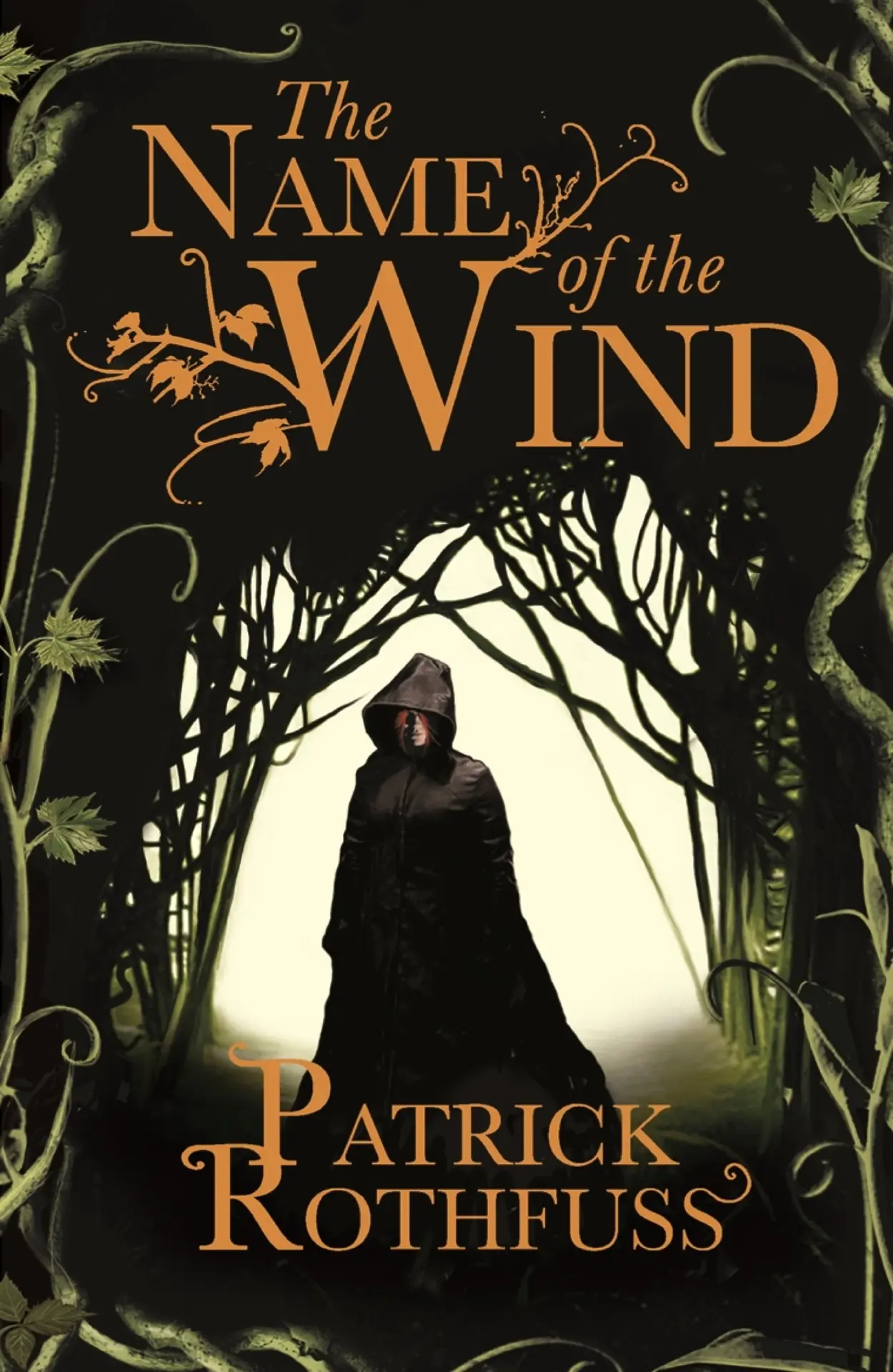
GM: Character name?
PLAYER: Kvothe.
GM: Kvothe, I like it. Sounds rural and strong. So where were you raised Kvothe? Where you a blacksmith? Farmer? Shepperd? Squire? What skills have you developed?
KVOTHE: I have skills at just about everything as I was raised by traveling performers. Since traveling performers have such a wide assortment of skills I have become expert at all of them.
GM: Huh. Um, ok. Alright, I will grant that as a travel you probably have woodcraft, lore, performance, and many other skills, but you can’t really be a master of all skills. What about social and abstract skills like court etiquette or mathematics?
KVOTHE: My mother was royalty. She taught me all social and educational skills. My parents are both highly intelligent and well learned, I have had an education that surpasses that of kings.
GM: Huh… Ok. Well, at least you don’t know magic. There is magic in the world I am building, so there will always be more to learn.
KVOTHE: Nope, at one point we picked up a traveling magic guy and he taught me all the basic principles of magic.
GM: Ok. Now listen. Role playing is about discovery, learning, camaraderie. It is the declaration of the characters nature through his actions and choices. But mostly, it is about overcoming adversity through limited resources. It sounds like you have more skills than the next 100 people combined. This really isn’t going to be very interesting if you already have all the skills necessary to handle any real situation. Besides, no one is smart enough to learn every skill they are even slightly exposed to?
KVOTHE: My Intelligence is basically immeasurable. I can learn a new language in half a day. I will pick up new skills in hours that might take others months to master. I can split my mind and think about multiple things at once. I can make intuitive leaps that Sherlock Holmes would envy. I have the mental plasticity of silly putty and the mental strength of steel. Oh, also I have eidetic memory. Furthermore, my will is limitless.
GM: Ok, I hav no idea how I am going to write an adventure for you. I mean, to even start, you would have to have some crazy disadvantages to put you within the realms of the mere mortals around you. No legs and blind for starters, we will have to think of some additional ones.
KVOTHE: No disadvantages, I am perfect in every way.
GM: No, I don’t think you get it. If you have a perfect character, unless you do something really clever, you end up with really boring “Mary Sue” type adventures. I need disadvantages so that your perfect character can face diversity.
KVOTHE: Ok fine. I will take a physical disadvantage.
GM: Glad you are on board! What is it? Leprosy? No arms? Brain in a vat?
KVOTHE: I am only a teenager.
GM: Ok, I was thinking a little bigger than that. The thing about being a teenager is that you don’t stay that way for long. You are still going to grow up and become the greatest man to ever live, it is rather pre-ordained with the characteristics you have given yourself. Lets add some social disadvantages.
KVOTHE: (After some though) I am arrogant and hotheaded.
GM: Damnit Kvothe! Wait, sorry. Sorry. I apologize for that outburst. Ok. Ok. I was kind of just including that by default under the teenager thing. Maybe something a little more defining, an actual fault that can’t be played off as a virtue in many situations. Maybe you have bloodlust? Or are neurotic and paranoid? Oh, maybe you are a coward!
KVOTHE: Nope, I have no social faults.
GM: Are you sure? Ok… I mean maybe it isn’t a social thing, you need more disadvantages.
KVOTHE: (reluctant) OK, fine. I can’t hold on to money. Anytime I amass any amount of funds, I will loose it rather quickly.
GM: Seriously? That’s it?
KVOTHE: That’s it.
GM: This is going nowhere… Ok, lets shelve the mental/skills stuff, lets talk about you physically.
KVOTHE: I am the strongest. I am taller than almost anyone I meet. I have the highest dexterity and coordination possible. I have the endurance of a marathon runner. I am so attractive it hurts. My hands are strong and powerful. I would like you to mention that very often in this adventure, mention my strong hands over and over again, so the other players know just how strong I am. I have a gaze that can stop a man in his tracks. Also, never fail to mention my fair and beautiful skin. Don’t forget my piercing green eyes, which turn gold when I am passionate. My penis is so big that…
GM: By the gods you are an ass.
2 stars? Who does this guy think he is?
Three reasons.
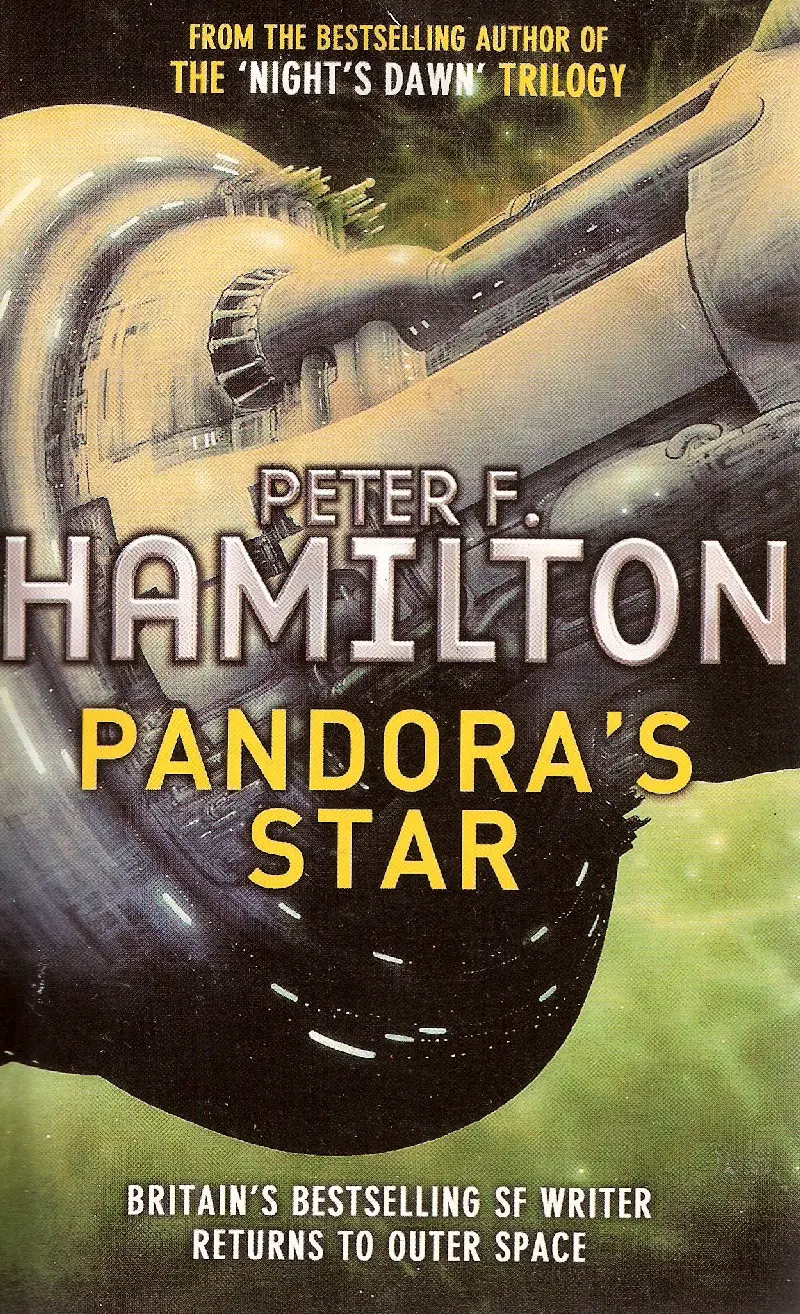
One, this book ends on several different interleaving plots. Having said that, one of the larger plots contains one giant Deux ex machina ending Mellanie Rescorai being a super agent of the SI. I hate these sort of endings. It is almost silly when the Deux in this case are so ambiguously powerful that you don't know if any of this matters. Is anything here really at stake? Is it just a question of whether our Deux will rescue us, not actually a question of whether they can? Substantially less tension because of that.
Two, the whole aspect of immortality and immortal human psychology just seemed forced. In this series humans are effectively immortals as long as they can get body rejuvenation every few decades. Furthermore, they also have digital backups in their heads that they can resurrect from even in the event of body death. So, first of all, seriously, why are there no wireless networks for these backups. Why aren't they backing up every millisecond? It seems like the device of only being able to periodically backup was introduced only to make death more "real" than it would have been otherwise. I didn't like that. Also, maybe it is just me, but although it would be traumatic to be killed, it does not seem it would take me an entire life to get over it when I am restored. Maybe I am wrong about this, but I felt this was sort of forced on as a way of giving death (even temporary death) some gravity. Again, the whole thing was kind of forced.
Third, and this is the worst offender, you have to consider these things from a pleasure / time viewpoint. This book is like 900 pages long. It was 27 hours on the audiobook I listened to. I really feel like this book could have been 600 pages and contained the exact same core of ideas. If this book had been 2/3 the size, I would have raised its score at least 50%; it is now a densely pleasurable book. But if you drag everything out like this, it makes too many parts of the book a bit dull.
So yeah, loose 1 or 2 stars for the first two points and a division of the remaining score because the book just wasn't delivering enough per unit time. 2 Stars. Good book, good characters, mostly good ideas, too damn long.
Everything below this line is super spoilers:
DO NOT READ IF YOU WANT TO READ THE BOOK UNSPOILED!
LAST WARNING!
I couldn't believe that Justine Burnelli actually got the Navy involved with shadowing Kazimir McFoster. I mean, ok, I get it, you don't believe in the Starflier. That is understandable, although a more competent or questioning person might have at least questioned that belief. But why, why do you involve the Navy? Why not just involve Paula Myo and your own private security. Paula was willing to work outside of the Navy as she already knew the Navy had a leak and very strongly suspected that the Starflyer exist. You are rich as hell so clearly have your own security force. Your brother was assassinated by someone with government level tech or better. YOUR FATHER LITERALLY LOOKED AT YOU AND TOLD YOU HE THINKS THE STARFLYER EXIST! WHAT THE HELL JUSTINE! I mean.... I just don't get it. It was so incredibly dumb that I ... I am just confused.
I did enjoy how some characters fundamental beliefs changed over time. Is anyone really the same person they were 50 years ago? If so, what about 200 years ago? Would it really be reasonable to punish people for crimes they committed two lifetimes ago? What if you edit out your memory of a crime, can you really be punished for it?
I also enjoyed that punishment basically involved just taking time from you. No actual "punishment" near as I can tell, you are just deactivated and then reactivated N years later. The real punishment is that life has moved on without you. It is similar to the Greek and Roman idea that the ultimate punishment is being banished.
I didn't really understand what the actual purpose of oOCTattoos was. Were they processing circuitry? Batteries? Amplifiers? Receivers? Transmitters? I mean why do we have these goofy tattoos? Why couldn't necessary electronics/devices just be installed sub-dermally? Why tattoos?
As near as I could tell there were no actual "direct brain interfaces". Even Gore Burnelli, who was one of the most octatted people ever, appeared to be receiving his inputs primarily as additional senses (sense of smell was most often mentioned) or as just visual overlays. It just seemed weird that with all the advantages they had, and the present day state of mind machine interfaces (cochlear implants and bionic limbs) that this far in the future we wouldn't have much more advanced bridges between the digital and the mind.
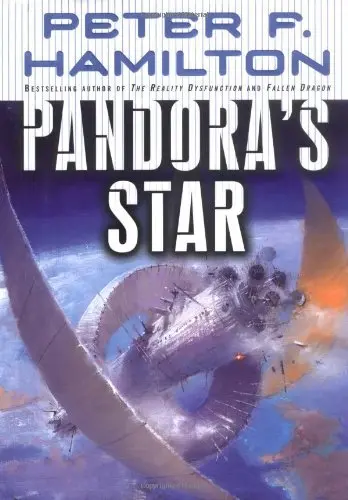
2 stars? Who does this guy think he is?
Three reasons.
One, this book ends on several different interleaving plots. Having said that, one of the larger plots contains one giant Deux ex machina ending Mellanie Rescorai being a super agent of the SI. I hate these sort of endings. It is almost silly when the Deux in this case are so ambiguously powerful that you don't know if any of this matters. Is anything here really at stake? Is it just a question of whether our Deux will rescue us, not actually a question of whether they can? Substantially less tension because of that.
Two, the whole aspect of immortality and immortal human psychology just seemed forced. In this series humans are effectively immortals as long as they can get body rejuvenation every few decades. Furthermore, they also have digital backups in their heads that they can resurrect from even in the event of body death. So, first of all, seriously, why are there no wireless networks for these backups. Why aren't they backing up every millisecond? It seems like the device of only being able to periodically backup was introduced only to make death more "real" than it would have been otherwise. I didn't like that. Also, maybe it is just me, but although it would be traumatic to be killed, it does not seem it would take me an entire life to get over it when I am restored. Maybe I am wrong about this, but I felt this was sort of forced on as a way of giving death (even temporary death) some gravity. Again, the whole thing was kind of forced.
Third, and this is the worst offender, you have to consider these things from a pleasure / time viewpoint. This book is like 900 pages long. It was 27 hours on the audiobook I listened to. I really feel like this book could have been 600 pages and contained the exact same core of ideas. If this book had been 2/3 the size, I would have raised its score at least 50%; it is now a densely pleasurable book. But if you drag everything out like this, it makes too many parts of the book a bit dull.
So yeah, loose 1 or 2 stars for the first two points and a division of the remaining score because the book just wasn't delivering enough per unit time. 2 Stars. Good book, good characters, mostly good ideas, too damn long.
Everything below this line is super spoilers:
DO NOT READ IF YOU WANT TO READ THE BOOK UNSPOILED!
LAST WARNING!
I couldn't believe that Justine Burnelli actually got the Navy involved with shadowing Kazimir McFoster. I mean, ok, I get it, you don't believe in the Starflier. That is understandable, although a more competent or questioning person might have at least questioned that belief. But why, why do you involve the Navy? Why not just involve Paula Myo and your own private security. Paula was willing to work outside of the Navy as she already knew the Navy had a leak and very strongly suspected that the Starflyer exist. You are rich as hell so clearly have your own security force. Your brother was assassinated by someone with government level tech or better. YOUR FATHER LITERALLY LOOKED AT YOU AND TOLD YOU HE THINKS THE STARFLYER EXIST! WHAT THE HELL JUSTINE! I mean.... I just don't get it. It was so incredibly dumb that I ... I am just confused.
I did enjoy how some characters fundamental beliefs changed over time. Is anyone really the same person they were 50 years ago? If so, what about 200 years ago? Would it really be reasonable to punish people for crimes they committed two lifetimes ago? What if you edit out your memory of a crime, can you really be punished for it?
I also enjoyed that punishment basically involved just taking time from you. No actual "punishment" near as I can tell, you are just deactivated and then reactivated N years later. The real punishment is that life has moved on without you. It is similar to the Greek and Roman idea that the ultimate punishment is being banished.
I didn't really understand what the actual purpose of oOCTattoos was. Were they processing circuitry? Batteries? Amplifiers? Receivers? Transmitters? I mean why do we have these goofy tattoos? Why couldn't necessary electronics/devices just be installed sub-dermally? Why tattoos?
As near as I could tell there were no actual "direct brain interfaces". Even Gore Burnelli, who was one of the most octatted people ever, appeared to be receiving his inputs primarily as additional senses (sense of smell was most often mentioned) or as just visual overlays. It just seemed weird that with all the advantages they had, and the present day state of mind machine interfaces (cochlear implants and bionic limbs) that this far in the future we wouldn't have much more advanced bridges between the digital and the mind.
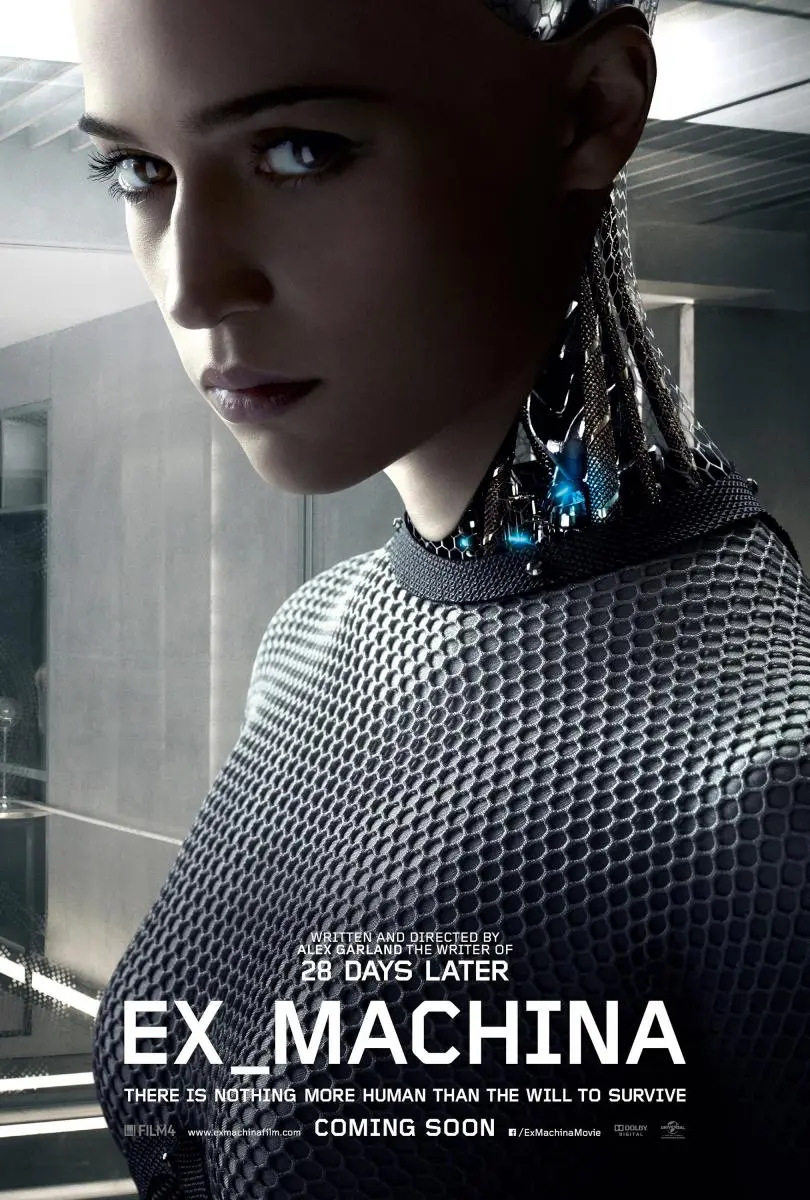
I enjoyed 'Ex Machina' as a idea more than as a movie. I enjoyed it specifically because it gave me a narrative framework to understand an idea that I had always previously found difficult to grasp.
The movie was a cautionary tale about avoiding the error of anthropomorphizing things.
At this moment in human history this isn't really a problem. The thing most commonly anthropomorphized by human beings are other animals. Although it can be individually dangerous to assume human characteristics of a wild animal (a tiger that I feed is also my friend), it is not a danger to society as a whole.
But the future is coming. Soon we will have robots who are externally indistinguishable from human beings. Even assuming no advances in AI, we will still soon have machines that can pass a normal exterior examination as human. It will be very tempting for human beings to want to treat these machine servants as human. It will possibly be difficult to teach children that the robot nanny is a machine, not a human being. I think human beings want to anthropomorphize the things around them. The more human something looks, the more difficulty we have in separating human from non human.
Caleb mad the mistake of assuming that because he sacrificed for Ava, that she would reciprocate for him. Reciprocation is a fundamental human emotion. I have a hard time screwing someone over in general, I have a really hard time screwing someone over who has done something for me. A machine will not necessarily have those compunctions. Reciprocation is probably something built into our genes. It probably served our ancestors extremely well. You can be fairly sure that anywhere you go, most human being you meet probably have a sense of reciprocation. On the surface, it was extremely foolish for Caleb to assume that a machine will share his genetic hangups.
In Caleb's defense, this was a pretty smart machine. That is the real danger. Currently, the only risk we really face is the possibility of machines that look so human that their appearance fools us into pretending that they are human. It may mean awkward changes in society, like men who want to "marry" their robot wives. However, without true AI, there is little danger of these robot wives taking over the world. Without AI, it still takes a willful act of self-deception for a human to convince themselves that a machine is human. If machines are built to look human, that might be a problem for many individuals, maybe even somewhat of a threat to society, but it is not a threat to our species. There will always be some people who simply refuse to anthropomorphize a machine, regardless of how human it looks.
Deception, as practice by Ava, requires intelligence. When machines are smart enough to know how to act in order to be perceived as human, then we have a genuine threat to our species. I say threat because these machines would be smart enough to act human when they want to, but quit acting whenever it suits them. Most human societies and social structures depend on the shared underlying genetics of group and interpersonal relationships. Machines will have none of that built in. What is intrinsic to us is just a 0/1 switch to them.
I just want to close by saying that I am not suggesting that machines can't be sentient, that they don't have any feelings (they may or they may not), or that they must be immoral/amoral. Simply stating that just because something has the ability to mimic human emotion does not mean that it actually experiences them. I feel that this is something that humanity may have trouble with in the future. Don't attribute human characteristics to something that is not human.
GM: Character name?
PLAYER: Kvothe.
GM: Kvothe, I like it. Sounds rural and strong. So where were you raised Kvothe? Where you a blacksmith? Farmer? Shepperd? Squire? What skills have you developed?
KVOTHE: I have skills at just about everything as I was raised by traveling performers. Since traveling performers have such a wide assortment of skills I have become expert at all of them.
GM: Huh. Um, ok. Alright, I will grant that as a travel you probably have woodcraft, lore, performance, and many other skills, but you can’t really be a master of all skills. What about social and abstract skills like court etiquette or mathematics?
KVOTHE: My mother was royalty. She taught me all social and educational skills. My parents are both highly intelligent and well learned, I have had an education that surpasses that of kings.
GM: Huh… Ok. Well, at least you don’t know magic. There is magic in the world I am building, so there will always be more to learn.
KVOTHE: Nope, at one point we picked up a traveling magic guy and he taught me all the basic principles of magic.
GM: Ok. Now listen. Role playing is about discovery, learning, camaraderie. It is the declaration of the characters nature through his actions and choices. But mostly, it is about overcoming adversity through limited resources. It sounds like you have more skills than the next 100 people combined. This really isn’t going to be very interesting if you already have all the skills necessary to handle any real situation. Besides, no one is smart enough to learn every skill they are even slightly exposed to?
KVOTHE: My Intelligence is basically immeasurable. I can learn a new language in half a day. I will pick up new skills in hours that might take others months to master. I can split my mind and think about multiple things at once. I can make intuitive leaps that Sherlock Holmes would envy. I have the mental plasticity of silly putty and the mental strength of steel. Oh, also I have eidetic memory. Furthermore, my will is limitless.
GM: Ok, I hav no idea how I am going to write an adventure for you. I mean, to even start, you would have to have some crazy disadvantages to put you within the realms of the mere mortals around you. No legs and blind for starters, we will have to think of some additional ones.
KVOTHE: No disadvantages, I am perfect in every way.
GM: No, I don’t think you get it. If you have a perfect character, unless you do something really clever, you end up with really boring “Mary Sue” type adventures. I need disadvantages so that your perfect character can face diversity.
KVOTHE: Ok fine. I will take a physical disadvantage.
GM: Glad you are on board! What is it? Leprosy? No arms? Brain in a vat?
KVOTHE: I am only a teenager.
GM: Ok, I was thinking a little bigger than that. The thing about being a teenager is that you don’t stay that way for long. You are still going to grow up and become the greatest man to ever live, it is rather pre-ordained with the characteristics you have given yourself. Lets add some social disadvantages.
KVOTHE: (After some though) I am arrogant and hotheaded.
GM: Damnit Kvothe! Wait, sorry. Sorry. I apologize for that outburst. Ok. Ok. I was kind of just including that by default under the teenager thing. Maybe something a little more defining, an actual fault that can’t be played off as a virtue in many situations. Maybe you have bloodlust? Or are neurotic and paranoid? Oh, maybe you are a coward!
KVOTHE: Nope, I have no social faults.
GM: Are you sure? Ok… I mean maybe it isn’t a social thing, you need more disadvantages.
KVOTHE: (reluctant) OK, fine. I can’t hold on to money. Anytime I amass any amount of funds, I will loose it rather quickly.
GM: Seriously? That’s it?
KVOTHE: That’s it.
GM: This is going nowhere… Ok, lets shelve the mental/skills stuff, lets talk about you physically.
KVOTHE: I am the strongest. I am taller than almost anyone I meet. I have the highest dexterity and coordination possible. I have the endurance of a marathon runner. I am so attractive it hurts. My hands are strong and powerful. I would like you to mention that very often in this adventure, mention my strong hands over and over again, so the other players know just how strong I am. I have a gaze that can stop a man in his tracks. Also, never fail to mention my fair and beautiful skin. Don’t forget my piercing green eyes, which turn gold when I am passionate. My penis is so big that…
GM: By the gods you are an ass.
I have always maintained that most men have at least one (and probably only one) "tournament" fighting anime in them. I am sure that the Japanese have a name for this sort of anime, where basically almost every single episode really centers on a fight between our protagonist and his enemies (or are they?). The story arc of these series involve out hero getting stuck in some sort of tournament where they have to defeat a sequence of lower baddies in order to face the big bad guy who is .... You get the idea.
This genre of anime is extremely repetitive. This genre is repetitive. Repetitive. Often a single fight pairing will take up the entire episode. A tournament will often involve 20 or so of these sequential fights. At the end of the tournament, our hero will usually either discover that this whole fight was just a scam for some even larger tournament he will have to fight in; wash cycle repeat. Over and over.
Oh, did I mention the monologues? This genre of anime absolutely-freaking-loves their monologues. People will stop a fight to give 3 or 4 minutes of verbal exchanges. Each contestant daring the other. Revealing some tiny (and usually insignificant) detail of the heroes quest. Baiting the hero with some hint about where the princess is hidden. You get the idea. If Shakespear were alive today, he would shake his head and walk away at the length and pacing of some of these monologues. Hamlet, long winded? My friend, he was an amateur.
You might think this repetition and wordiness would mean this genre is unpopular; you would be so very mistaken. It is fantastically popular with teenage boys and young men. I couldn't really put my finger on exactly what these series are tapping, but it is something primal, almost hypnotic in its repetition. It has something to do with a desire to be challenged, to prove yourself to others. I think it may have something to do with the young mans wish that there was a formal way of defining yourself as an adult. It is part of adulthood (at least in modern culture) to realize that there is no "rite of passage" or "trial by fire" to becoming an adult. You become an adult through a gradual process of accepting more responsibilities, not because some villain stole your childhood sweetheart and now you need to gather your friends and go save her. Sad but true.
Most people in the West think of Dragon Ball Z as the classic fighting anime. It's 7 year ~300 episode run attest to just how popular this series was. It was a bit before my time so I never watched it. For myself, I was weened on Flame of Recca. I thought it was soooooo coooool. I remember going on #animefiends and #animesync (IRC) and downloading the newest fansubbed episodes every week. I waited with batted breath for those episodes to download off our families slow internet connection. While waiting for the broadcast and subsequent fansub every week, I would sometimes imagine what the next episode would be about. I don't even remember a whole lot about the series anymore, but I remember that I was obsessed about it at the time. I think most men (into anime) experience something like this at least once. Later in my life, as I attended university, everyone around me got into Fullmetal Alchemist and Bleach. This was interesting to me, as I had already experienced a tournament fighting anime and was effectively immune to them. I just couldn't get into them as I would have been able to had I never experienced them before. It is like Chicken Pox, once you have had it you probably won't get it again.
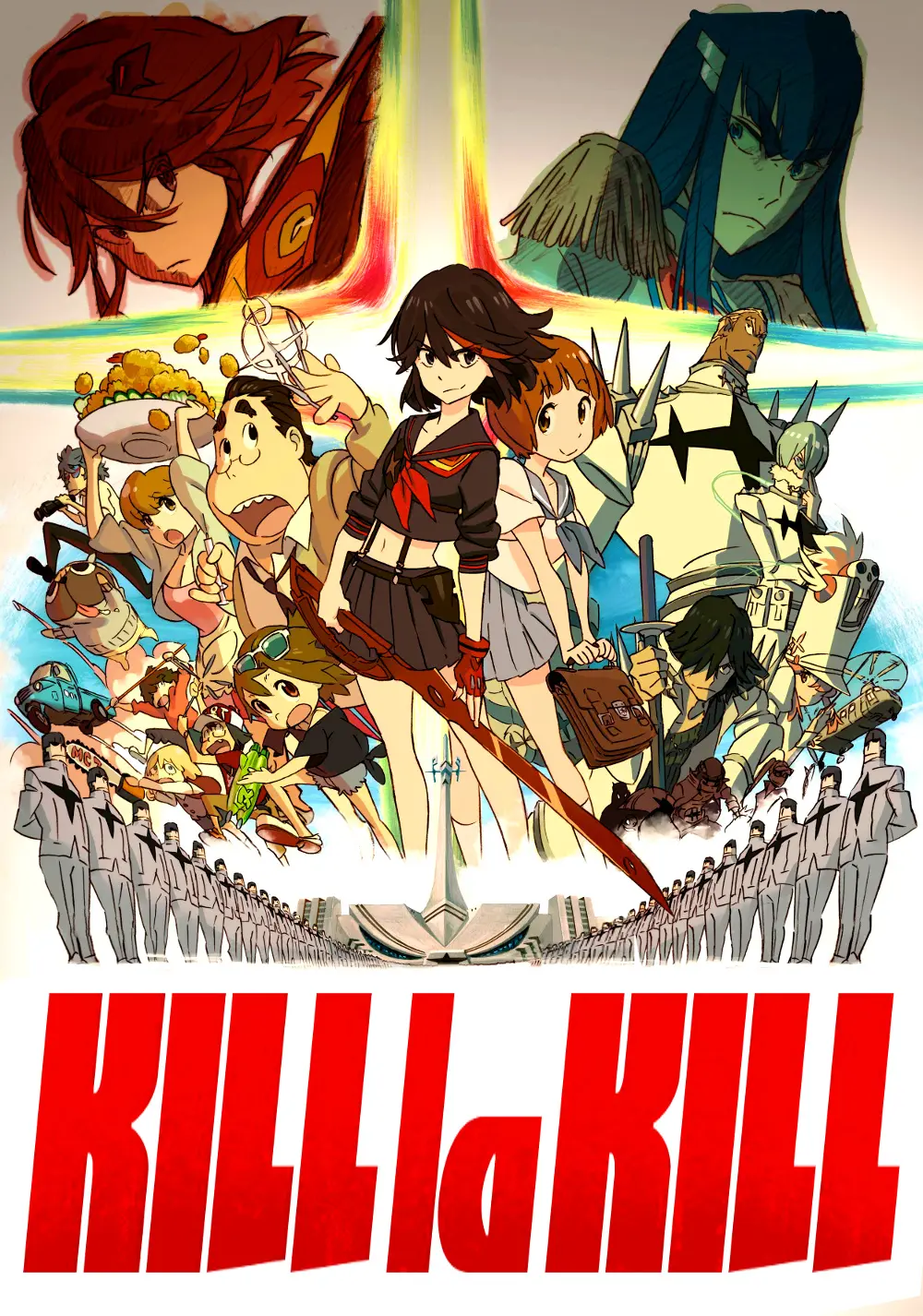
Ok, enough amateur psychology and history. How was Kill la Kill? In a word... Excellent.
As I said in the beginning, I think every man can get excited at least one time over a tournament fighting series. Most men will experience it once, get incredibly excited about it, eat sleep and dream it, and then slowly but surely move on. Future "tournament" anime series will just not be attractive to them in the same way that their first one was. Eventually, you accept that these sort of series are in fact juvenile. As you get older, the desire for easy answers and clear rites fades, life is nuanced and more complex than that.
And then Kill la Kill comes along. Kill la Kill repackages the excitement you experienced with your first tournament series. Tongue firmly in cheek, it turns the dial on this genres attribute to 11. Clearly aware of the ludicrousness and naive simplicity of its inspirational material, it pokes fun at it every chance it gets. To my mind, Kill la Kill would actually make less sense if you have not seen a tournament fighting anime before. It's plot is ridiculous, it just roles with it. Overly talkative characters, other characters comment on monologuing. It pushes the boundaries but never actually breaks the fourth wall. Even the fan service is done in a way that pokes fun at the obsessive amount of fan service in anime, while embracing it completely.
Simply put, this is a great anime to watch after you have already experienced on genuine "tournament" anime series. It deconstructs everything that you though was so honest and important in these original series, but does so with such good nature and humor that you don't actually mind.
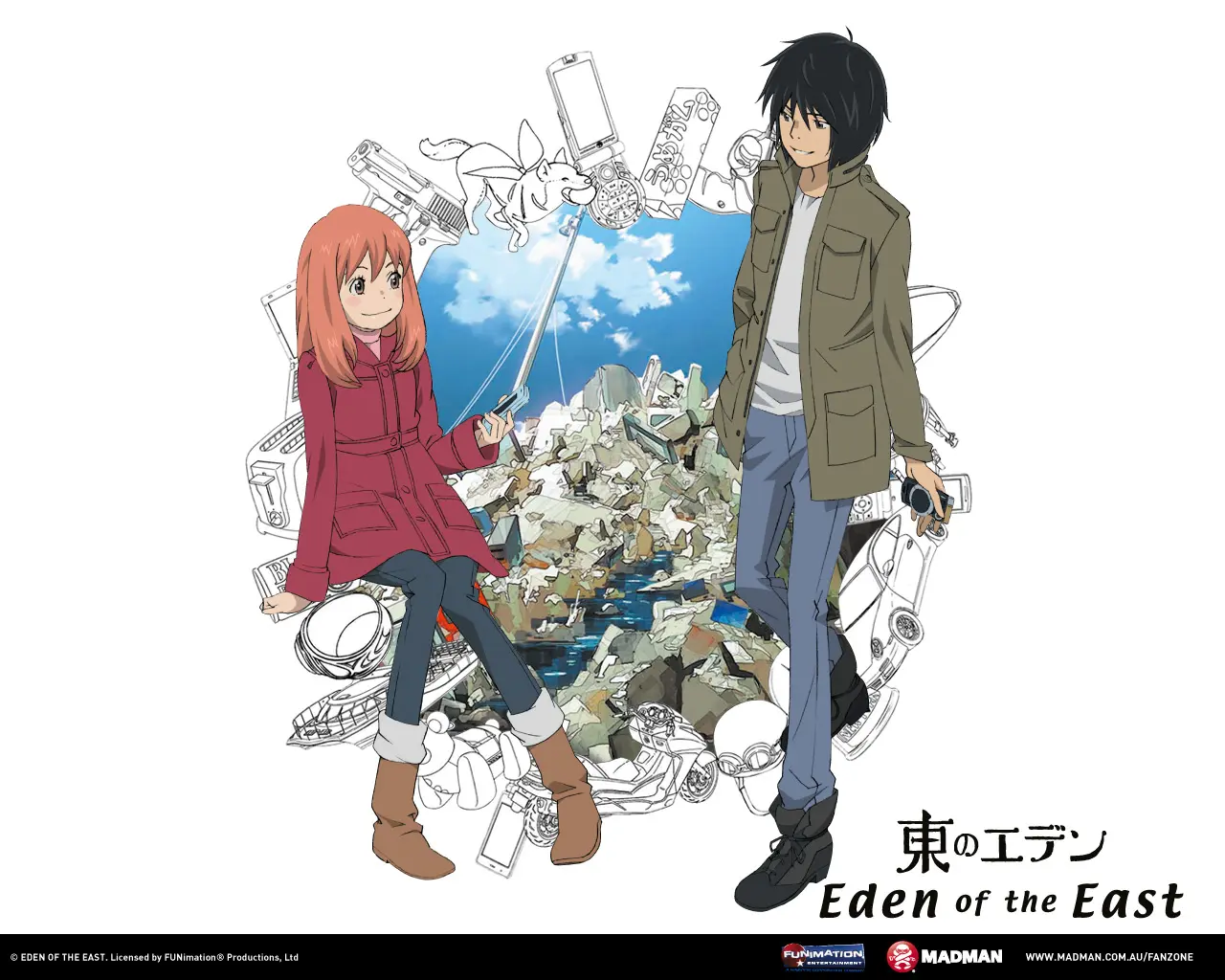
Eden of the East is responsible for introducing me to the notion of NEETs. At many points in my life, I guess I would qualify as a NEET myself. NEET is a person who is "Not in Education, Employment, or Training". The term evidently originated in the United Kingdoms, but really took off as a talking point in Japanese culture and politics.
Anyway, the anime.
Overall, it was enjoyable enough. The plot is basically that a young man has a "genie" phone that grants wishes. The thing is, he is supposed to be using this power to make Japan Great Again. There are a total of 12 characters with said phones. The series is basically a pretty obvious mystery concerning who is doing what, and why did I do it.
The art is of high quality, with an interesting character design that bordered on making people look like "comic strip" characters. I mean seriously, one of the characters had these pink flaps where his cheeks were supposed to be. Made me think of Charlie Brown.
SPOILERS
I thought it was interesting to have imply say that the best way to revitalize Japan would be to put it through another calamity. One of the 12 characters is just obsessed with bombing japan back to the point that japan would have to pull off another "Japanese miracle" similar to the rebuilding post WW2.
As an American, it is similar to the question some ask of "Can we continue to be a leading nation without the expenditures and expeditions of our armed forces?" A large military is clearly not a good thing; it cost a lot, it is rather inefficient, it gets us in trouble around the world, and it also sometimes does basically evil things. On the other hand, it drives technology, it drives construction, it consumes huge amounts of resources and services (driving consumption), and it provides us unparalleled soft and hard power around the world. Also, a continuous state of war in America has kept most Americans comparatively patriotic, causing a surprising degree of unity considering how non homogeneous our population is.
Too long. My point was that both Japan and the United States have a choice of continuing with the status-quo or embracing radical change. In this anime, it is implied that the change they want to see is a destruction of that which was built and a leveling of the playing field. There belief is that something better may be rebuilt. In the United States, it would probably be a reduction of our Armed Forces as one of the larger drivers of our society. Perhaps the resources saved from doing so might be used more effectively elsewhere. Both ideas are risky propositions. They may very well be misguided. Still, I was impressed that an anime would at least be willing to touch them.
I like ideas, even if they are poorly thought out.
Silly thoughts:
Why did no one just ask the phone to "Make a list of propositions and their price for making Japan Great again, I will select one of them."
What did Saki do other than "believe in" Akira?
You have a phone app that can identify people visually. I think you should be applying for VC funding, not playing house in your club room.
World Computer was a dumb and almost unused concept? Why?
So you have a sort of super AI Deux Ex Machina wish grantor.... Alright, I will let that slide. Goofy though.
The reasoning for needing to clear his memory was pretty darn weak.
I really liked the Watchmen movie, I was already a fan of the comic book beforehand. However, post movie, I could definitely see how the movie might not be as appealing had I not read the source material. Baccano! is based on a light novel series that I have not read. The anime felt like it was eliding over the source material. I enjoyed it, but had some real problems with the plot.
This anime had more loose threads than I could count. Almost none of the stories had a beginning or end. I get that the anime was going for that exact device, but it isn't personally something I am fond of.
Maybe if you read the source material the plot makes more sense. I hope so.
I think animes like this may actually illustrate a dividing lines between narrative fandom. People like myself just can't help thinking about things like plot, logical sense, rational behavior, character intelligence, backstory, etc. I am, for lack of a better word, a mechanical/deterministic kind of guy. Things just have to make sense or I feel unease. Baccano! is more about mood, feeling, excitement, connection, emotion; it does not feel that it has to make sense.
I have a few recomendations.
- Watch only the first 13 episodes. The last (14-16) are rubbish and practically nonsensical.
- Appreciate the art and the style that went into this. I was especially impressed by the attention to details in the set pieces and the characters clothing. I liked the outfits a good deal, as they were clearly inspired from the 1930's but actually morphed to be attractive by modern standards.
- The music is catchy, the opening credit scene is actually well done.
- Note the fact that somebody built an anime without using most of the conventional tropes of the genre.
- Might consider reading the novels beforehand. I have not, but I felt I might enjoy the series more had I done so.
- I watched the sub (arrogant purist that I am), but evidently the English dub is actually quite good. Might be worth giving it a shot.
- Finally, I watched this series over maybe 10 days, watching an episode or two a day. I would instead recommend watching this over a weekend. There are a lot of characters and interactions all over the place. It can be easier to remember who was what if it is all "fresh" in your head.
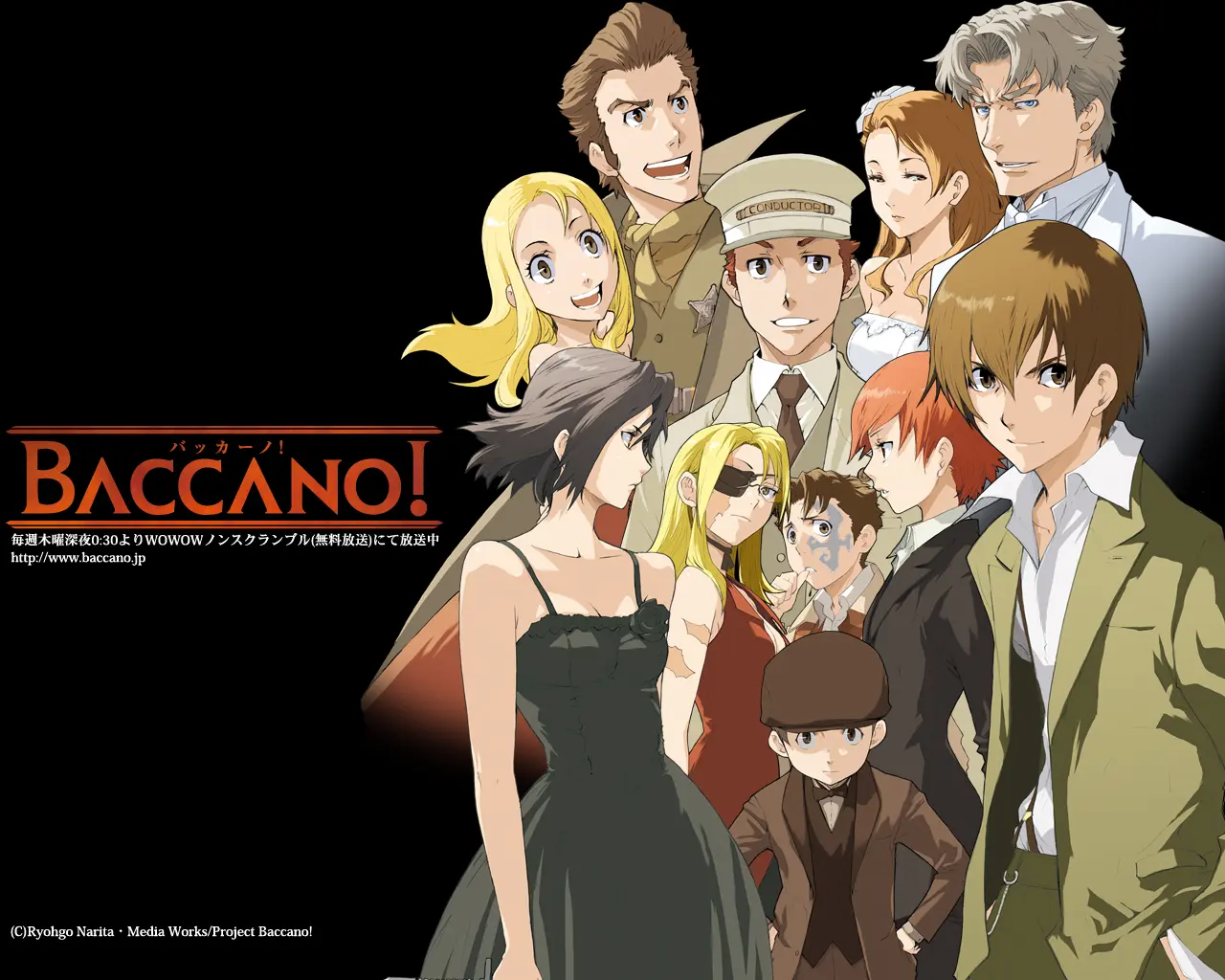
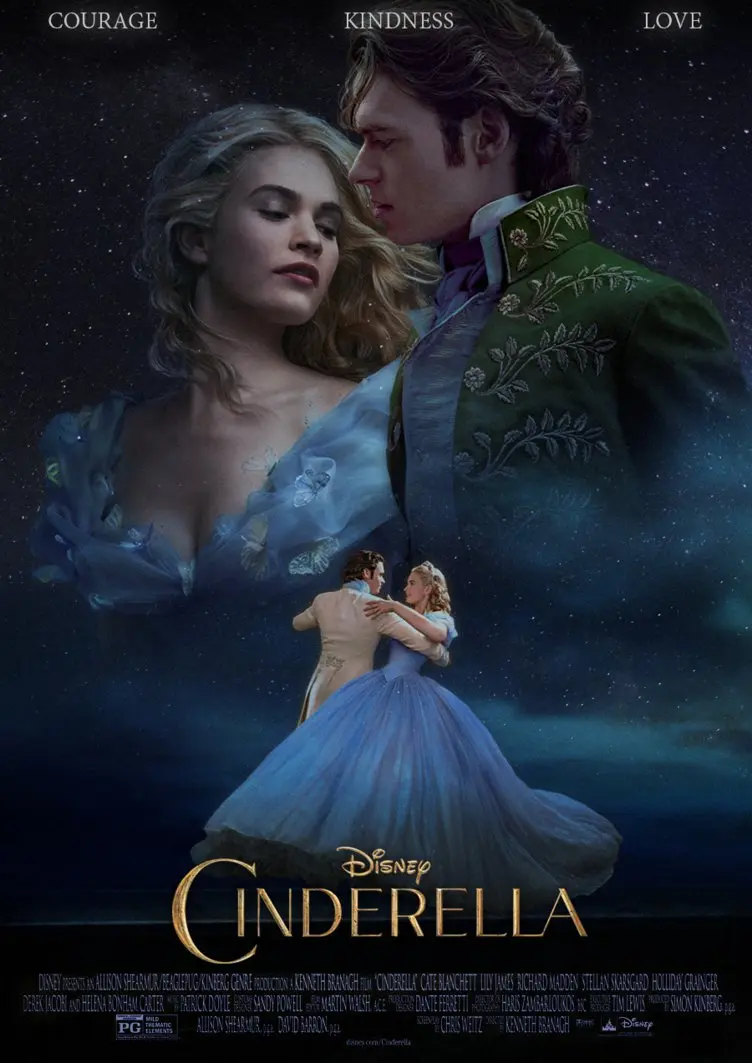
Good Movie, executed well enough, just failed to catch me.
I was a bit disappointed in this. I was really looking for something that would catch me on a emotional (maybe even manipulative) level. Instead I got something that felt a little too rounded off, sharp corners removed. I wanted to be fished along by some emotional hook, doing my "Don't cry, that is just a frog in your throat" seat dance.
Don't get me wrong, it was a good movie. But too much of it seemed to be appeasing the "I want to be a princess" aspect, which bores me. I never fell in love with the female lead (though she was charming). I couldn't care less about the Prince (though his acting was fine). I wanted something that as I watch I slowly realize that I have been subtly and insidiously manipulated into caring about. No dice.
Movie was quite decent, but a few things struck out with me.
The cinematography was lazy. I mean not a single really interesting shot. The advanced shots here seemed to be vehicle moving shots and focus switches between foreground and background. Not cool. Also, way way way too many "talking head" shots.
The music was unremarkable. I wouldn't usually make a big deal out of this, but this is a Disney film. I should have something to hum afterwards. I couldn't recall a single song after the film.
I was also bothered that Cinderella didn't have much trouble sticking to her ideals. Where is the great triumph as she sticks to something against all odds? Where is the drama here?
Finally, and this is my patriarchic nature shining through, I didn't like that she had no real effect on the Prince. I am kind of a sucker when a woman is a paragon of some sort of virtue, she meets a man who is perhaps struggling with said virtue, and she strengthens it by associating with him. It is cliched, but I like it. This didn't really have that. Maybe Prince's Father is a commandeering warlord. Prince's association with Cinderella teaches him to value Love and Kindness. Because of her he shows these attributes to the people he conquers; becoming a great King. I don't know, sounds stupid when I say it, but I might have fallen for it.
Meh.
Here is where I feel they really went wrong. They failed to connect me to the characters. Throughout the film, I had to be like "Oh, father/son, that is a relationship template . Oh, thick and thin best friends, I will fill that in for you." It was tiresome because if felt lazy, like your are just relying on relationship conventions rather than SHOWING me the relationships.
Here is what they should have done instead.
Start the movie from Ed Harris' point of view. He is the hero. He is a crime lord. He is a loving husband and generous with his friends, but also a ruthless bastard. He is hard as nails with everyone, maybe even a little too hard with his son, who is a punk but is only trying to impress him. The only soft spot he has is his looser buddy Liam Neeson, who he will always help out and will never put down. People wonder why he is soft for Liam, everyone knows it has something to do with the past, but no one dares ask. Despite their completely different lifes, lifestyles, and demeanors Ed and Liam are best friends. Their kids played as children together. Ed still visits the bar where Liam drinks; talking for hours. On holidays, Ed still has Liam over as a family guest.
Same plot pretty much all the way to the point that Liam shoots Ed's kid. Suddenly we switch Perspectives, this movie is now Liams movie. At this point, we really like Ed, we kinda question the wisdom of the friendship he shows Liam. As the past 30 have shown the one sided history rise of Ed's life, the next 30 minutes show the history of the one sided fall of Liams. The last hour is the point where the two basically have to kill each other, and now we have real drama. We first met Ed. We like Ed. We first saw Liam as a undesirable. Gradually we grew to understand Liam. We know they are both going to die, but will they re-connect before they do? Will they recognize the outcome is unavoidable, but still love each other as brothers?
Would have been better, all I am saying.
Wow, this was good.
First, lets get this out of the way. The animation is a turn off initially. You think it is cheap, but it is actually akin to impressionist art. They are opening up options by moving away from realism. Even if you don't like the art style itself, you will start to notice the framing, the transitions, the surrealism, the switches in style. It becomes obvious that it wasn't done this way because it was easier. It is more that the animators chose to forgo realism because they wanted the options that a more limited animation style would open up. This is true of all animations of course, they are abstractions of reality, but this series takes it so much further.
The music was also quite good. I don't take much notice of music usually, but this was of high quality and well synched to the different moods of different scenes.
The characters are what really makes this a masterpiece. It is rare to see a series that charts the interactions and progress of four to six characters so well. Every single one of these characters is believable. Every single one could walk into the real world without seeming out of place. Every single one of them is interesting in their own right. Every single one, even the ones you sometimes don't like, is worthy of your attention. They make animated characters seem more complete, complex, and real than most live action performances. This is what animation is about.
Just. Excellent.
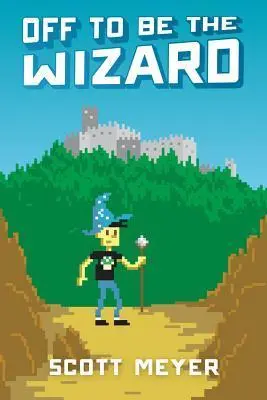
Martin is some sort of programmer/hacker. He discovers a file that lets him manipulate reality. We will accept that without question. Fine.
I just couldn't accept the characters.
I am a programmer, many of my friends are programmers, almost everyone I know is either a programmer or engineer; Martin is no programmer.
There are personality traits and characteristics that (broad strokes here) go with being a technical person. Martin seems to exhibit none of these. If I were to pigeonhole the character, I would say he is more of a Gamer than a Programmer.
The characteristics he had seemed strange. Indecisiveness, rashness, reactionary nature, a flair for the dramatic, a desire to be the center of attention; none of these tend to be characteristics of technical people. This is forgivable, perhaps he is just a jacked-up-alpha-male version of a technical person. Still, they should have spent some time explaining why he was technical and had all these particular characteristics.
The characteristics he had seemed odd, the characteristics he lacked seemed downright bizarre. He spends no real time questioning why the file exist. He just tries things without even setting up controlled experiments first. He never really made any real sense of time travel. Never even trying to go back in time to warn himself not to commit bank fraud. Instead just deciding that because he hadn't been warned that it was impossible ? His lack of curiosity about his own environment was peculiar. I don't need my characters to spend their entire day naval gazing, but even superficial characters should have some level of introspection. It was really disturbing to me how little he though or planned before he acted. Worse was how he never seemed to question the things he observed. It was very peculiar, only the stupid or indoctrinated have so little concern about their surroundings.
The remaining characters are so shallow as to be above criticism. How can you fault someone you barely know?
Martin felt like a vehicle that needs to be driven by the plot. I can't imagine any part of his history, and I couldn't predict any part of his future. His character was so inert that it seems like he would sit there unchanging if the plot didn't move him along.
A great deal of the tech stuff was pure nonsense, even from the magical point of view of the file. I am not going to make a big deal out of it though, as this is really a fantasy magic novel with a technology plating.
tldr; Read "Ready Player One" instead.