
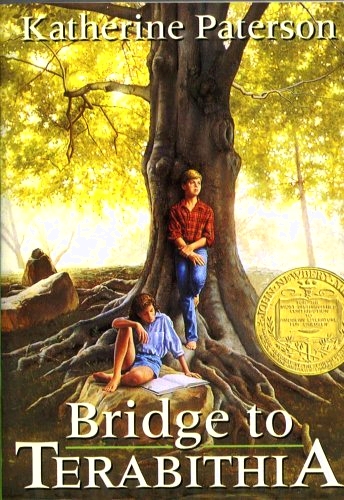
Short summary, you should read it, you should read it at any age. It is a book for children, but it respects the reader and its characters enough to not soften reality for them. Reading this book at a young age might be difficult, but the pleasure of having morality, character and goodness outweigh the pain one might experience from the plot events.
< SPOILERS BELOW - SERIOUSLY, READ THE BOOK FIRST, IT'S PRETTY SHORT >
< YOU SURE YOU READ IT? >
< I AM ABOUT TO RUIN THINGS FOR YOU! >
< LAST CHANCE! >
When I was in 4th grade (almost 20 years ago) our teacher read this book to us aloud. I remember how we all enjoyed it so much, and just how floored we were by the death. Life is funny, I remember being far more disturbed by the death of Leslie in this book than I was by most anything else at the time. For me, this was probably the book that cemented the notion of death. I had read (consumed more like) many books that had deaths in them. Most of them were "bad guys", occasionally it would be someone close to the hero, it didn't really hit you: Leslie's death hit me. I don't really have much to say about it, but I consider that the mark of good writing: allowing the reader to vicariously experience a state of being (emotion?) that they have not yet experienced themselves.
As a adult, having known many people who have died, I was actually surprised at just how literal and real Jess's account of the grieving process was. As a child, I wonder if I understood that he was in shock? Did I think he was a psychopath or slow? Perhaps I agreed with his sister and though he was some sort of monster? Until you have experienced death yourself, the way people react to the loss of someone close to them can seem very foreign, very alien. I don't really know if the process can be explained. You can describe it, you can even first person narrate it, but it is difficult to communicate. I liked how the author never specifically said something like "Jess is in shock, this is a state of reduced responsiveness and ...". Instead, she just let Jess be Jess, described him in such a way that his memory and actions seemed disparate, confused, calm, disassociated. She let the narrative speak for itself. Whether a child reading this book can understand these ideas depends on the child, but regardless of whether they "get it" or not, I think it certainly opens their eyes to something deep and true. Gives them something insightful and real to think about.
I also enjoyed the relation that Jess had with his father. It was not good. His father was not a bad man, but was not up to the task of raising Jess and supporting him the way he should have. I liked that he and his father became closer at the end, opening up just a little, without it going full blast and fully resolving like daytime television.
I liked that Jess was occasionally small and shallow, and was literally taking on the character and mannerisms of his environment. You could almost feel his desire to "leave" his world, but he would never have had the strength to do so without Leslie. I really enjoyed how Leslie was shaping Jess into the person he wanted to be, allowing him to distance himself from his surroundings, both in the form of escape and through discovery. And they were doing all of this by just being good friends to each other.
Anyway, good book. It is one of those books that I really hope I have the chance to discuss with a child someday. I think, yes, it could lead to a few nights of troubled sleep, it could scare them a little in the short term. But the knowledge and understanding they get from it, and the depth of discussion they could gather from it, make the cost entirely worthwhile.
P.S. There is also a really good 2007 movie based on the book, you should check it out.